Introduction
As an e-commerce store owner, you meticulously craft your product listings, optimise your site, and refine your marketing. Yet, there's a crucial, often invisible component that dictates whether a customer completes their purchase: your shipping options. Many WooCommerce stores rely on third-party shipping plugins to calculate real-time rates from carriers like Australia Post, FedEx, or UPS. These plugins, in turn, depend heavily on external, third-party APIs (Application Programming Interfaces) provided by the shipping carriers themselves.
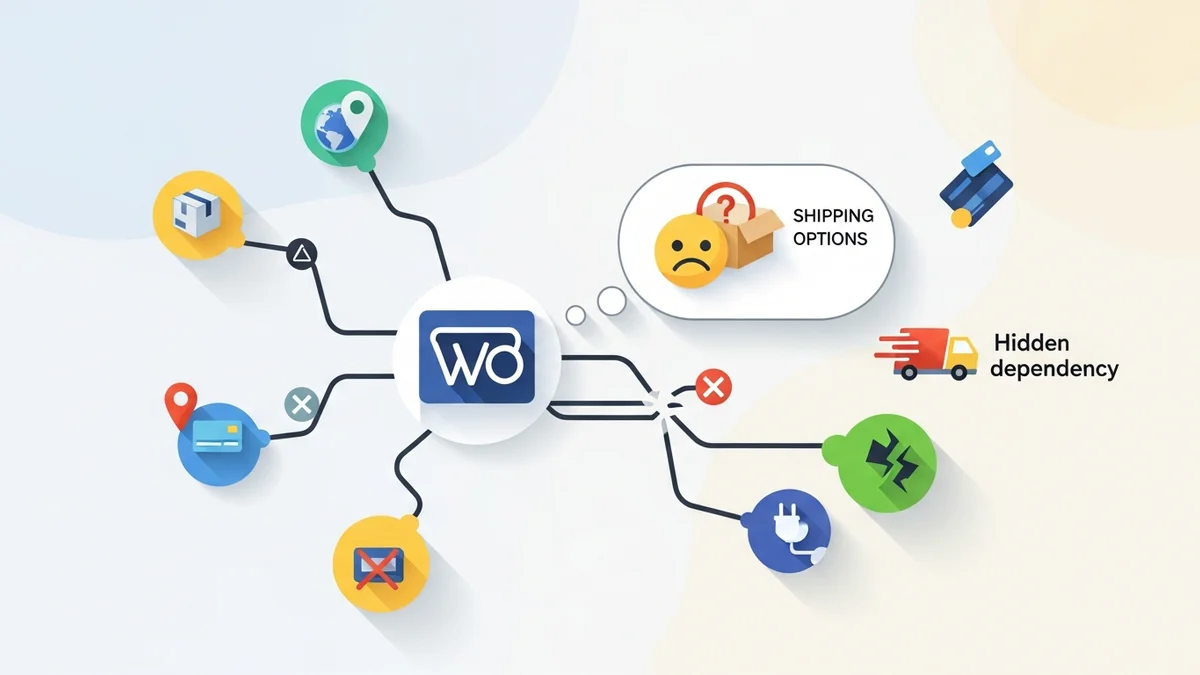
This article will explore this hidden dependency. We'll uncover what happens during a WooCommerce shipping API failure, what your customers see, and the substantial costs to your business. Understanding this vulnerability is the first step towards building a more resilient and reliable checkout experience for your customers.
The Invisible Hand: How Shipping APIs Power Your Checkout
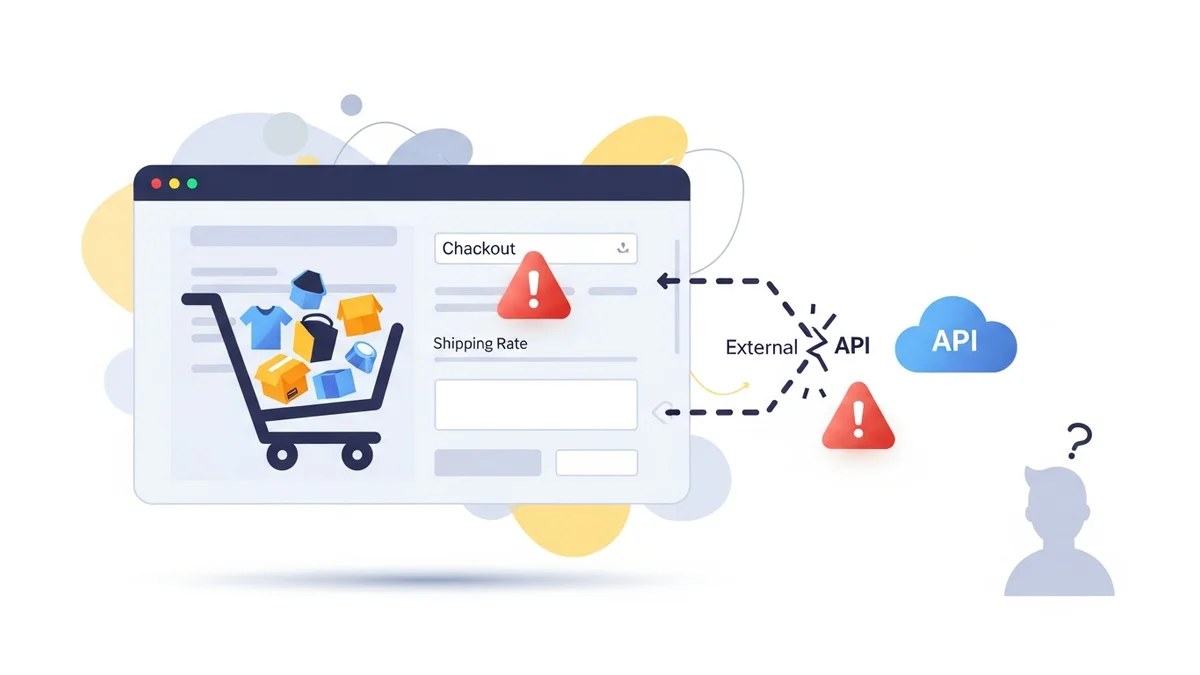
When a customer reaches your WooCommerce checkout, several processes kick into gear behind the scenes. They enter their shipping address, and almost instantly, your store needs to present accurate shipping costs and delivery estimates. This isn't magic; it's the result of your shipping plugin communicating with an external API.
Your shipping plugin acts as an intermediary. It takes the customer's details (address, chosen products, weight, dimensions) and sends this information to the shipping carrier's API. The API then processes this request, calculates available services and their corresponding rates, and sends that data back to your plugin. Finally, your plugin displays these options to your customer.
This entire interaction usually happens in milliseconds. It's an elegant system when it works, providing dynamic, real-time shipping information without you having to manually input every possible rate. However, this convenience comes with a significant reliance on the stability and availability of those external APIs.
The Perilous Pitfall: What Happens When Shipping APIs Fail
The moment a third-party shipping API becomes unreachable, your checkout process can grind to a halt. This isn't just an inconvenience; it's a direct threat to your sales and customer satisfaction.
"WooCommerce Shipping Rates Disappeared": The Customer Experience
When a WooCommerce third party shipping API fails, your customers are often the first to notice. What they see is typically a jarring and frustrating message like:
- "No shipping options available for your location."
- "Please enter your address to get shipping rates." (Even if they already have)
- A generic error message, or simply no shipping methods displayed at all.
Imagine filling your cart, heading to checkout, and then being told you can't ship the items. This immediate roadblock creates doubt, frustration, and often, abandonment. Customers assume something is wrong with your store, not with a distant API they've never heard of. This directly contributes to high abandoned cart rates.
The Real Cost to Your Store
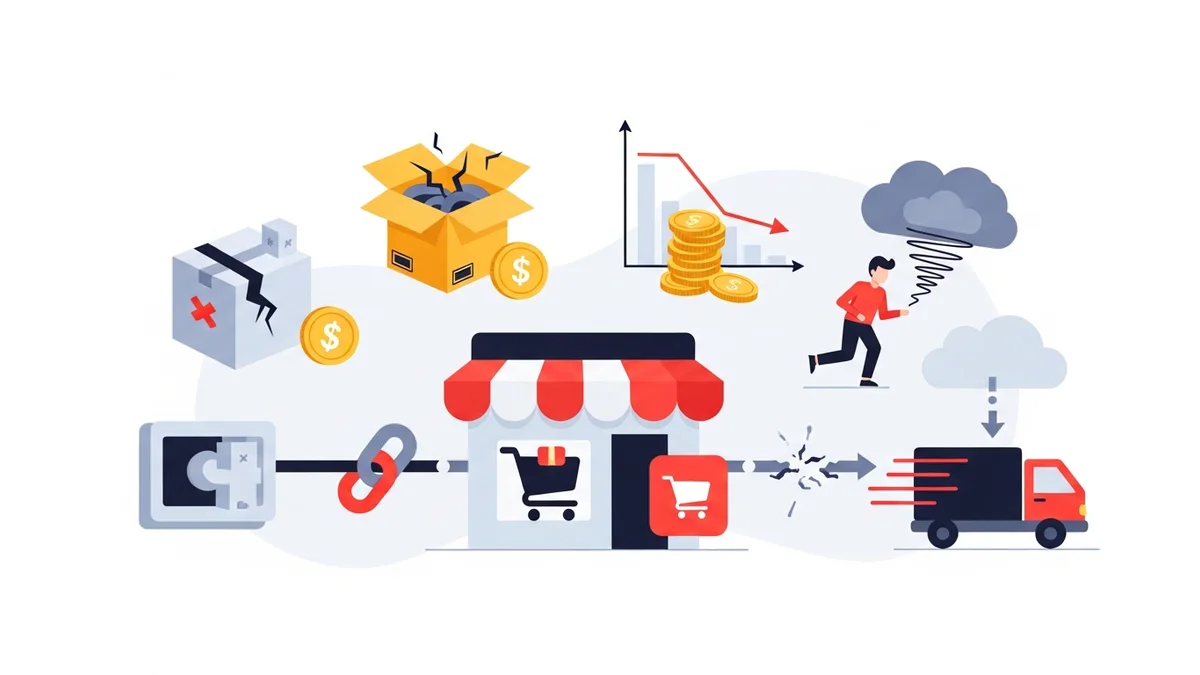
The impact of a WooCommerce shipping API error extends far beyond a single lost sale. The costs can quickly accumulate:
- Abandoned Carts and Lost Revenue: The most immediate and tangible loss. Customers who can't get a shipping quote won't complete their purchase.
- Reputational Damage: A broken checkout makes your store look unprofessional and unreliable.
- Customer Service Overload: Frustrated customers will reach out, asking why they can't place an order.
- Reduced Trust: Trust is paramount in e-commerce. If customers can't rely on your basic checkout functionality, they'll be hesitant to return.
- Time and Resource Drain: Investigating a "shipping plugin stopped working WooCommerce" issue can be a time-consuming and complex process.
Common Causes of "WooCommerce Shipping API Failure"
Understanding why these APIs become unreachable is key to preventing future issues. Common culprits include:
- Carrier System Outages: The shipping carrier's own servers might be down or experiencing maintenance.
- Plugin Using a Retired Endpoint: Carriers periodically retire old API endpoints when transitioning to new ones. In April 2026, Australia Post retired their old PAC API endpoint at
/api/postage/, completing a transition to the current endpoint at/postage/. Australia Post had responsibly run both endpoints during the transition period, giving plugin developers time to update. However, the official Australia Post Shipping Method for WooCommerce plugin, even at its most up-to-date version, wasn't updated to use the current endpoint. Sauce Code identified the root cause and notified the plugin developers, prompting the fix. - Network Connectivity Issues: Problems can occur anywhere in the chain, from your server's connection to the internet, to the carrier's network infrastructure.
- API Key Expiry or Invalidity: If your shipping plugin's API key expires or is revoked, the API requests will fail.
- Rate Limiting: Some APIs have limits on how many requests can be made within a certain timeframe.
- Plugin Configuration or Conflicts: Incorrect settings in your shipping plugin or conflicts with other plugins can prevent proper communication.
Proactive Protection: Mitigating Third-Party API Risks
The good news is that you don't have to be a helpless victim of third-party API failures. By understanding the risks, you can implement strategies to protect your WooCommerce store.
Understand Your Dependencies
Take stock of every external service your WooCommerce store relies on. This includes payment gateways, inventory management systems, and, critically, shipping carriers. Know which plugins connect to which APIs and what impact a failure could have.
Regular Monitoring is Key
Waiting for customer complaints is a reactive and costly approach. Proactive monitoring means actively checking the health and availability of these critical shipping APIs. This ensures you know about issues before your customers do.
Implementing Fallback Strategies
Even with monitoring, outages can still occur. Having a fallback plan is essential. Many store owners manually switch to flat-rate shipping during an outage, but this requires manual intervention and quick thinking.
More sophisticated solutions can offer automated fallback. For instance, if your active API endpoint fails, a system might attempt to cycle through previously known, stable endpoints. This last-resort safety net can sometimes keep your checkout running during an incident, buying you precious time to investigate the root cause.
Utilising Dedicated Monitoring Tools
Manually checking API statuses or waiting for logs can be inefficient. This is where dedicated tools like WooCommerce Shipping Monitor Pro become invaluable. This plugin is specifically designed to address the challenges of WooCommerce shipping API failure by providing immediate, actionable insights.
WooCommerce Shipping Monitor Pro actively monitors the external API endpoints that your WooCommerce shipping plugins depend on. Here's how it helps:
- Immediate Email Alerts: When a shipping API becomes unreachable (e.g., due to a carrier outage or your plugin using a retired endpoint), the plugin immediately alerts you via email. You'll know within minutes, not hours, allowing you to react swiftly.
- Proactive Health Checks: The plugin runs scheduled health checks against each monitored API using WordPress native cron. This catches problems proactively, often before any customer is affected.
- Last-Resort Fallback: As a safety net, if the active API endpoint fails, the plugin attempts to cycle through previously known, stable endpoints. In April 2026, when the official plugin was using the retired endpoint, this fallback feature could have found the current working path, allowing your checkout to continue functioning while you investigate and await a proper plugin update.
- Detailed Event Logging: Every health check, alert, and fallback attempt is logged, providing a full event history per provider directly in your WordPress admin.
Related Articles
Continue your learning with these related resources:
- Why WooCommerce Shipping Breaks (And How to Stop It From Costing You Sales) (Comprehensive Guide)
- The Real Cost of Shipping Downtime for WooCommerce Stores
- Why "Set and Forget" Doesn't Work for WooCommerce Shipping Plugins
- What Automatic Endpoint Fallback Means for Your WooCommerce Store
- How to Get Email Alerts When Your WooCommerce Shipping API Has Issues
- Your WooCommerce Shipping Reliability Checklist for Peak Season
Conclusion
The reliance of your WooCommerce checkout on third-party shipping APIs is a hidden dependency that demands your attention. A WooCommerce shipping API failure can swiftly lead to "no shipping options available," causing abandoned carts, lost sales, and damage to your brand. By understanding these vulnerabilities and implementing proactive strategies, including robust monitoring and fallback mechanisms, you can ensure your shipping processes are resilient.
Tools like WooCommerce Shipping Monitor Pro empower you to stay ahead of potential issues, transforming a reactive, costly problem into a managed, monitored risk. Protecting your checkout from the unpredictable nature of external APIs is not just good practice; it's essential for maintaining customer trust and securing your e-commerce revenue.