Picture this scenario: It's 2 PM on a Tuesday, your busiest sales day. Unbeknownst to you, Australia Post retired their old PAC API endpoint an hour ago, they'd responsibly run both old and new endpoints during a transition period, but the official Australia Post Shipping Method for WooCommerce plugin, even at its most up-to-date version, wasn't updated to use the current endpoint. Your WooCommerce checkout is now showing "No shipping options available" to every customer. By the time someone complains — if they bother to complain at all — you've already lost dozens of sales.
This is the reality for most e-commerce store owners. They operate in the dark, only discovering shipping failures when customers complain or when they happen to notice a suspicious dip in conversions. By then, the damage is done.
The single most valuable thing you can do for your WooCommerce store's shipping reliability isn't implementing complex failover systems or manually checking your checkout every hour. It's far simpler: know about problems immediately. Within minutes, not hours. Before your customers notice, not after they've abandoned their carts and moved on to a competitor.
This is where immediate shipping alerts become your store's first — and most critical — line of defence.
The Cost of Not Knowing
Every minute your shipping is broken costs you money. But the true cost goes beyond the immediate lost sale.
Lost Sales You'll Never Recover
When a customer encounters "No shipping options available," they don't typically contact you to report the problem. They leave. They find another store. Research shows that most customers who abandon a cart due to a checkout error never return to complete that purchase. These aren't sales you'll recover tomorrow when you fix the issue — they're gone permanently.
The Silent Bleed
Perhaps the most insidious aspect of shipping failures is how quietly they can drain your business. If the Australia Post PAC API becomes unreachable at midnight, perhaps because your plugin is using a retired endpoint, you might not discover it until you check your store the next morning. During those hours of ignorance, every potential customer encountered a broken checkout.
Reputation Damage
Customers who experience checkout problems form lasting impressions. Even if they don't leave a negative review, they're unlikely to recommend your store. Word of mouth works both ways, and "I couldn't even complete my order" is a story that gets shared.
Why Speed Matters: Minutes vs Hours
The difference between knowing about a shipping API failure in 3 minutes versus 3 hours is enormous.
In 3 Minutes
You receive an email alert. You immediately enable your pre-configured flat-rate fallback shipping method. Total customer impact: perhaps 2-3 attempted checkouts saw an error. You investigate the root cause while your store continues operating normally.
In 3 Hours
You discover the problem through a customer complaint or by accident. During those 3 hours, potentially hundreds of customers encountered a broken checkout. You scramble to enable a fallback, then spend time apologising to customers who contacted you. The true number of lost sales is unknowable — most customers simply left without a word.
The maths is stark. If your store processes an average of 10 orders per hour, a 3-hour undetected outage represents roughly 30 lost sales. At an average order value of $80, that's $2,400 in lost revenue from a single incident.
What Immediate Shipping Alerts Look Like
Effective shipping alerts aren't just notifications — they're actionable intelligence delivered at the right time with the right information.
Instant Email Delivery
When a shipping API becomes unreachable during a customer checkout or a scheduled health check, you receive an email within minutes. Not a daily digest, not a weekly report — immediate notification when the problem occurs.
Actionable Information
A useful alert tells you exactly what happened: which provider failed, which endpoint was attempted, what error was returned, and when it occurred. This isn't a vague "something went wrong" message. It's specific, technical information that helps you understand the scope and potential cause immediately.
Direct Links to Take Action
The best alerts include a direct link to the relevant admin page where you can investigate and take action. No hunting through menus — one click takes you straight to the provider's status page.
Recovery Notifications
Equally important is knowing when the problem resolves. If the API starts working again, you should receive a recovery alert. This tells you the incident is over and helps you understand the duration and pattern of outages.
The Alert Types That Matter
Not all shipping issues are equal, and your alerting system should distinguish between different scenarios.
Fallback Triggered
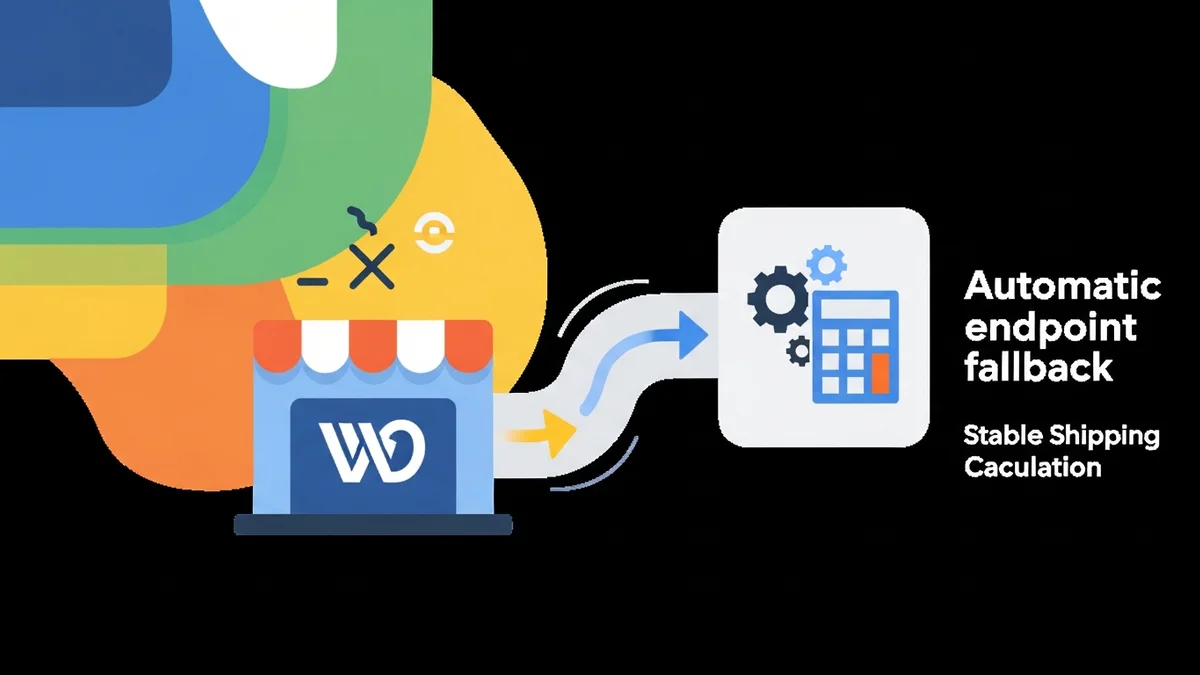
This alert tells you the primary API endpoint failed, but an alternative endpoint is now being used. Your checkout is still working, but something changed. This is your early warning to investigate — the fallback is buying you time, not solving the underlying problem.
All Endpoints Failing
This is the critical alert. Every known endpoint for the shipping carrier has failed. Your customers are now seeing errors at checkout. Immediate action is required — typically enabling a manual flat-rate shipping method until the carrier's API recovers.
Health Check Failed
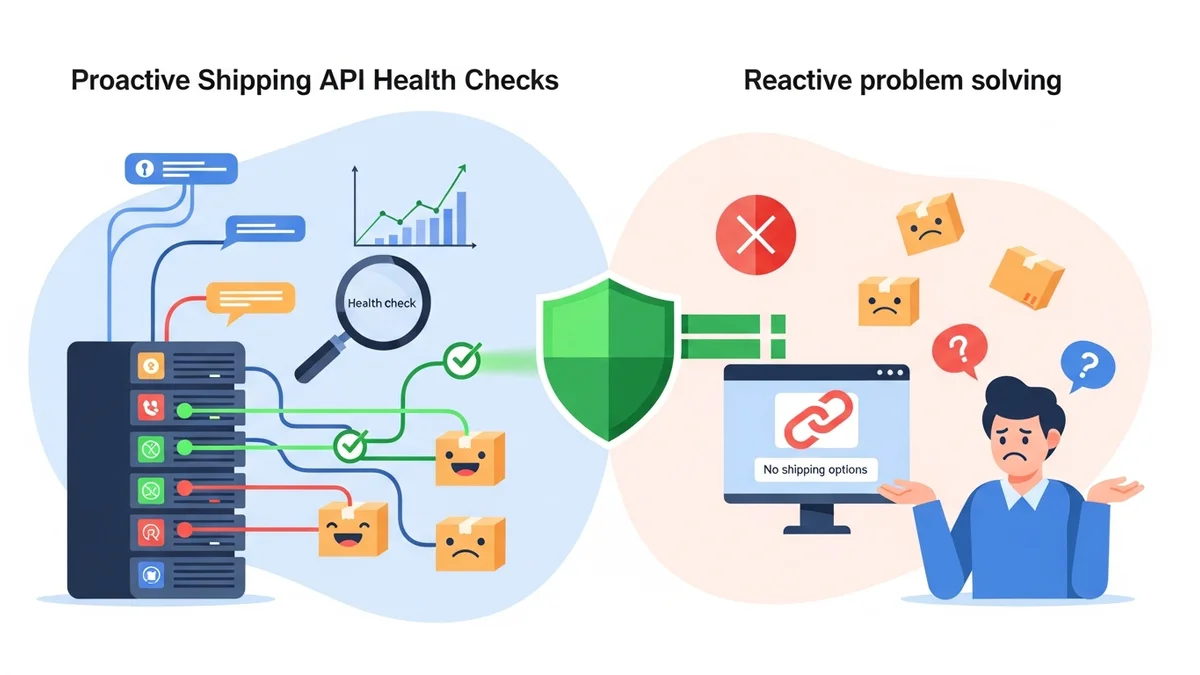
Scheduled health checks proactively test the API even when no customers are checking out. A health check failure might catch a problem at 3 AM before your first customer of the day encounters it.
Recovered
The API is working again. This alert closes the loop on an incident and lets you know normal service has resumed.
Beyond Alerts: The Complete Picture
Immediate alerts are the foundation, but they work best as part of a comprehensive monitoring approach.
Scheduled Health Checks
Rather than waiting for a customer checkout to discover a problem, scheduled health checks actively test the API at regular intervals. This catches issues during quiet periods when few customers are on your site.
Alert Cooldowns
During a sustained outage, you don't need an email every minute. Configurable cooldown periods prevent inbox flooding while ensuring you're still informed about ongoing issues.
Event Logging
Every alert, health check, and status change is logged. This creates a historical record that helps you understand patterns — does this carrier have problems every Tuesday? Did issues start after a particular date?
The Investment Perspective
Consider what you currently spend to acquire a customer. If your customer acquisition cost is $15 per customer, and a 2-hour undetected outage costs you 20 customers, that's $300 in wasted acquisition spend alone — not counting the lost profit from those sales.
Immediate shipping alerts transform your relationship with shipping reliability from reactive to proactive. Instead of being the last to know about problems, you become the first. Instead of apologising to frustrated customers, you're fixing issues before they escalate.
Taking Action
If your current approach to shipping reliability is "hope for the best," it's time to reconsider. Every day without proactive monitoring is a day you're gambling that nothing will go wrong with your shipping carrier's API.
WooCommerce Shipping Monitor Pro provides immediate email alerts when supported shipping APIs become unreachable (currently, this includes only the Australia Post PAC API provider), with scheduled health checks, detailed event logging, and alert cooldowns to keep you informed without overwhelming your inbox. You'll know about problems within minutes — not when customers start complaining.
Because in e-commerce, the race isn't just about who has the best products or prices. It's about who can keep their checkout working reliably, day after day, even when external services have other plans.
Related Articles
Continue your learning with these related resources:
- Why WooCommerce Shipping Breaks (And How to Stop It From Costing You Sales) (Comprehensive Guide)
- The Real Cost of Shipping Downtime for WooCommerce Stores
- Why "Set and Forget" Doesn't Work for WooCommerce Shipping Plugins
- What Automatic Endpoint Fallback Means for Your WooCommerce Store
- How to Get Email Alerts When Your WooCommerce Shipping API Has Issues
- Your WooCommerce Shipping Reliability Checklist for Peak Season