Introduction
Few things are more frustrating for an e-commerce store owner than a customer abandoning their cart due to a shipping error. The generic WooCommerce message, "There are no shipping options available. Please ensure that your address has been entered correctly, or contact us if you need any help," is a common culprit. This message provides little insight into the actual problem, leaving you to guess the cause.
This comprehensive guide will help you understand why WooCommerce displays this error and, more importantly, how to systematically troubleshoot and fix the underlying issues. We'll cover everything from basic setup oversights to complex API failures, ensuring your customers always see the shipping options they need.
Understanding the "No Shipping Options Available" Message
The "No shipping options available" message is WooCommerce's default response when it cannot calculate any valid shipping rates for a customer's cart and delivery address. This doesn't necessarily mean your shipping setup is entirely broken; it often points to a specific configuration gap or an external service problem preventing a successful calculation.
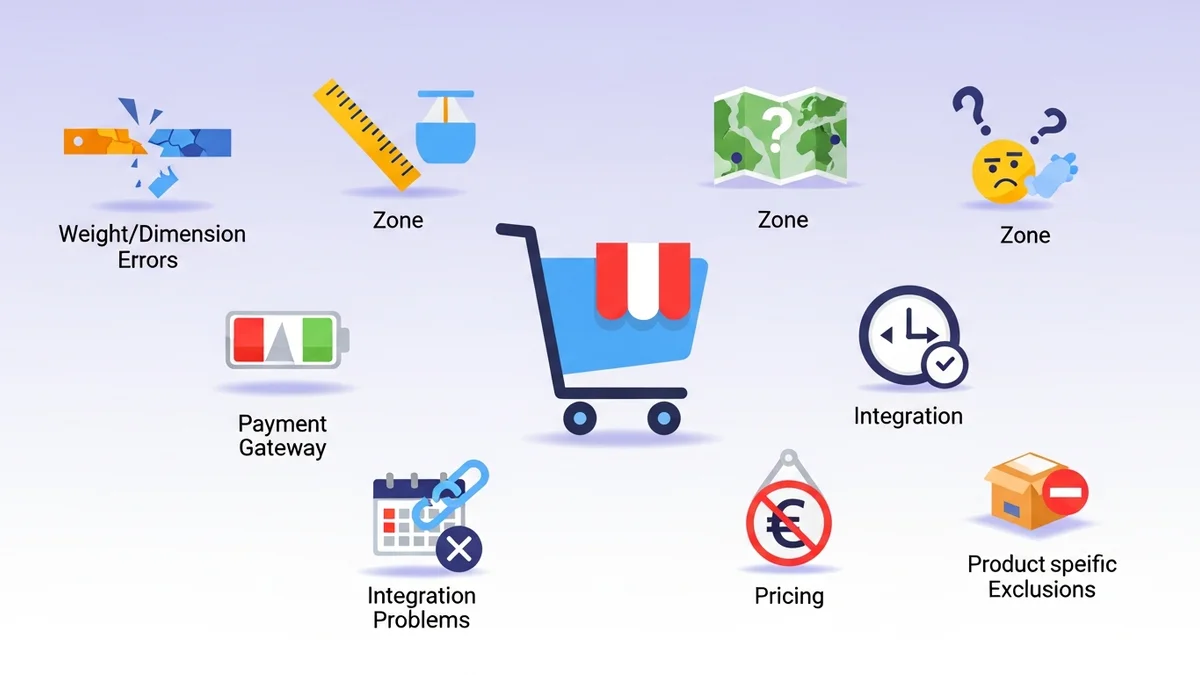
Common Causes and Solutions for Shipping Problems
Incorrect Shipping Zones Configuration
The Problem: Shipping zones are the foundation of WooCommerce shipping. If a customer's address doesn't fall within any of your defined shipping zones, WooCommerce won't know which shipping methods to offer.
The Solution: Navigate to WooCommerce > Settings > Shipping > Shipping Zones. Ensure you have zones covering all regions you intend to ship to, both domestically and internationally.
Missing or Misconfigured Shipping Methods
The Problem: Even if a customer matches a shipping zone, if that zone doesn't have any enabled shipping methods, WooCommerce still won't be able to calculate rates.
The Solution: For every shipping zone, click "Add shipping method" and choose from the available options. Make sure the method is enabled within the zone.
Product-Specific Shipping Class Issues
The Problem: If a product is assigned a shipping class that doesn't have a corresponding rate defined in your chosen shipping methods, the system can fail.
The Solution: Go to WooCommerce > Settings > Shipping > Shipping Zones, then edit a shipping method (e.g., Flat Rate). You'll find options to set costs per shipping class.
Weight, Dimensions, or Quantity Restrictions
The Problem: Many shipping carriers and plugins have limits on parcel weight, dimensions, or even the number of items that can be shipped in a single package.
The Solution: Ensure all your products have accurate weight and dimensions entered in their product data. Review your carrier plugin's settings for maximum weight, dimensions, or item limits.
Geolocation and Customer Address Problems
The Problem: Sometimes, the issue isn't with your setup but with the address information provided by the customer or how WooCommerce interprets it.
The Solution: Test with valid addresses. Consider using an address validation plugin.
Caching Conflicts
The Problem: Caching mechanisms, while great for website performance, can sometimes interfere with dynamic elements like shipping rate calculations.
The Solution: Clear all caches. Exclude checkout pages from aggressive caching.
API Endpoint Failures and External Service Issues
The Problem: Many WooCommerce stores rely on third-party shipping plugins that integrate with carrier APIs (like Australia Post, Sendle, or FedEx) to provide real-time shipping rates. If these external APIs become unreachable, experience issues, or your plugin is using a retired endpoint, your store won't be able to retrieve rates.
In April 2026, Australia Post retired their old PAC API endpoint at /api/postage/, completing a transition to /postage/. Australia Post had responsibly run both endpoints during the transition period, giving plugin developers time to update. However, the official Australia Post Shipping Method for WooCommerce plugin, even at its most up-to-date version, wasn't updated to use the current endpoint. Sauce Code identified the root cause and notified the plugin developers, prompting the fix. Many stores using the plugin experienced shipping rate calculation failures, which were often only discovered after customer complaints.
The Solution:
- Check Carrier Status Pages: Most major carriers have status pages where they announce outages. Check these immediately if you suspect an API issue.
- Verify API Keys: Ensure your API keys in the shipping plugin settings are correct and haven't expired.
- Use a Proactive Monitoring Tool: This is where a solution like WooCommerce Shipping Monitor Pro becomes invaluable. Instead of waiting for customers to report "no shipping options available," this plugin proactively monitors the external API endpoints that your WooCommerce shipping plugins depend on.
How WooCommerce Shipping Monitor Pro Helps:
- Immediate Alerts: If an API endpoint becomes unreachable (e.g., Australia Post's PAC API stops responding or returns errors), the plugin immediately alerts you via email. You know about problems within minutes, not hours or days.
- Scheduled Health Checks: It runs scheduled health checks against each monitored API via WordPress native cron, catching problems proactively before customers are affected.
- Last-Resort Fallback: As a safety net, if the active endpoint for a provider fails, the plugin attempts to cycle through previously known, functional endpoints. In situations where your plugin is using a retired endpoint but an alternative is available (like the April 2026 scenario), this can keep your checkout functioning while you investigate and apply a proper fix.
- Detailed Logging: Every health check, alert, and fallback attempt is logged to a custom database table. This comprehensive event history provides crucial debugging information.
By using a tool like WooCommerce Shipping Monitor Pro, you move from reactive troubleshooting to proactive problem prevention, significantly reducing the impact of external API issues on your sales.
Plugin Conflicts or Outdated Software
The Problem: Conflicts between your theme, other plugins, or an outdated version of WooCommerce or WordPress can sometimes manifest as shipping calculation failures.
The Solution: Ensure your WordPress core, WooCommerce, your theme, and all plugins are updated to their latest versions. Perform a standard debugging process by switching to a default theme and deactivating plugins one by one.
Proactive Shipping Monitoring: Preventing Future Issues
While this guide provides solutions for existing problems, the best strategy is prevention. Many of the issues that lead to "no shipping options available" are intermittent or external, making continuous monitoring crucial.
Implementing a solution like WooCommerce Shipping Monitor Pro shifts your approach from waiting for customer complaints to actively ensuring your shipping infrastructure is always operational. Knowing immediately when an external shipping API encounters issues allows you to address the problem or implement a manual fallback (like temporary flat-rate shipping) before it impacts your bottom line.
Related Articles
Continue your learning with these related resources:
- Why WooCommerce Shipping Breaks (And How to Stop It From Costing You Sales) (Comprehensive Guide)
- The Real Cost of Shipping Downtime for WooCommerce Stores
- Why "Set and Forget" Doesn't Work for WooCommerce Shipping Plugins
- What Automatic Endpoint Fallback Means for Your WooCommerce Store
- How to Get Email Alerts When Your WooCommerce Shipping API Has Issues
- Your WooCommerce Shipping Reliability Checklist for Peak Season
Conclusion
Encountering the "No shipping options available" message in WooCommerce can be a frustrating roadblock for both you and your customers. However, by systematically troubleshooting the common causes – from misconfigured shipping zones and methods to external API failures and plugin conflicts – you can quickly identify and resolve these issues.
Remember that prevention is better than cure. Proactive monitoring of your external shipping dependencies, as offered by WooCommerce Shipping Monitor Pro, provides an essential layer of defence against unforeseen outages and endpoint retirements. By maintaining a robust and resilient shipping setup, you ensure a smooth, reliable checkout experience that keeps your customers happy and your sales flowing.