Introduction
For e-commerce managers running a WooCommerce store, efficient and cost-effective shipping is paramount to profitability and customer satisfaction. Australia Post's MyPost Business platform offers a powerful solution for managing domestic and international shipments. However, truly leveraging its benefits requires a clear understanding of its pricing structure.
Unlike some traditional shipping accounts with rigid tiers, MyPost Business operates with a dynamic, volume-based discount model. This guide will demystify how these pricing mechanisms work, providing WooCommerce merchants with actionable insights to optimise their shipping strategy, reduce costs, and support business growth.
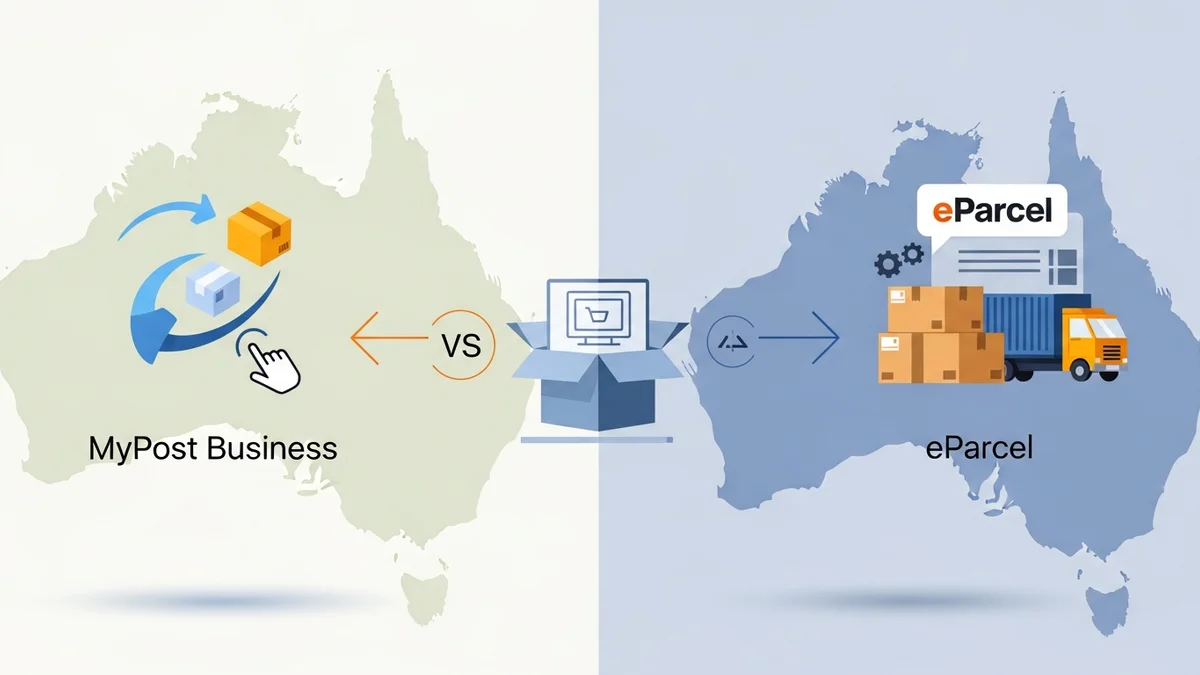
MyPost Business vs. eParcel: A Quick Overview for Context
Before diving into MyPost Business pricing, it's helpful to understand its position within Australia Post's business offerings. Australia Post primarily provides two main business account types: MyPost Business and eParcel.
- MyPost Business: Designed for small to medium-sized businesses or those with fluctuating shipping volumes. It offers simplicity, online label creation, and volume-based discounts without requiring a formal contract.
- eParcel: Geared towards larger businesses with consistent, high shipping volumes. It typically involves a dedicated account manager, negotiated rates, and more advanced integration options.
While eParcel often has more explicit "tiers" or negotiated rate cards, MyPost Business offers a flexible structure that allows growing WooCommerce stores to access better rates as their shipping volume increases, without the commitment of an eParcel contract. Our focus here is on maximising the value from MyPost Business.
Understanding MyPost Business Pricing Fundamentals
MyPost Business pricing is not based on fixed, publicly advertised tiers with names like "Bronze" or "Silver." Instead, it operates on a more fluid system where your effective shipping rate per parcel improves as your overall shipping volume and spend with Australia Post increase. This dynamic approach ensures that as your WooCommerce store grows, your shipping costs can become more competitive.
Key factors influencing your rates include the parcel's characteristics (size, weight, cubic weight), the destination (local, interstate, regional, international), and the chosen service type (e.g., Standard Post, Express Post). Crucially, MyPost Business rewards consistent shipping activity with incremental discounts, effectively creating "soft tiers" based on your actual usage.
The Role of Volume and Spend Thresholds
The core of MyPost Business discounts lies in reaching specific volume or spend thresholds. While these thresholds aren't always explicitly published, Australia Post continually assesses your shipping activity over a period (e.g., weekly or monthly). As you cross certain internal benchmarks, your account automatically qualifies for better rates on subsequent shipments.
For a WooCommerce merchant, this means that processing 100 parcels in a month will generally yield better per-parcel rates than processing just 20. The system is designed to incentivise greater usage, directly translating increased sales volume into reduced shipping expenses. This continuous feedback loop ensures that your operational efficiency improves alongside your business growth.
How MyPost Business Volume-Based Discounts Work
The discounts you receive through MyPost Business are primarily driven by the cumulative volume of parcels you send. This isn't about negotiating a rate card upfront, but rather about a responsive system that grants better pricing as your shipping activity demonstrates a higher commitment to Australia Post's services.
Types of Volume Discounts
- Standard Parcel Volume: As you send more standard parcels (those you pack yourself and print custom labels for), the base rate for these parcels decreases. This applies across various weight and zone categories.
- Prepaid Satchel Volume: For merchants who utilise Australia Post's prepaid satchels (e.g., 500g, 1kg, 3kg, 5kg Express or Standard Post satchels), discounts can apply to the purchase price of these satchels when bought in bulk, or through reduced rates on individual satchel usage as your overall volume grows.
- Combined Service Volume: Often, the total volume across all services (Standard, Express, domestic, international) contributes to your overall standing, potentially unlocking better rates across the board.
It’s important to note that these discounts are typically applied automatically. You won't usually see a notification stating you've moved to "Tier 2." Instead, you'll observe lower shipping costs when generating labels, particularly if you monitor your per-parcel cost over time within your MyPost Business account dashboard.
Factors Influencing Your Effective Rate
While volume is king, other factors significantly impact your final shipping cost and, by extension, your effective rate within the MyPost Business framework:
- Parcel Dimensions and Weight: Australia Post uses both actual weight and cubic weight (volume-based weight) to determine shipping costs. The higher of the two is used. Efficient packaging that minimises dead space can prevent you from paying for "air."
- Destination Zones: Shipping costs vary significantly based on distance. Local deliveries are cheaper than interstate, and remote regional areas incur higher costs. Understanding your customer geography helps predict overall shipping expenditure.
- Service Speed: Express Post services are naturally more expensive than Standard Post. Your mix of services will heavily influence your average parcel cost.
- Consignment Type: Whether you're sending small letters, flat rate satchels, or custom-dimension parcels, each has a different pricing structure that contributes to your overall spend and potential for discounts.
By meticulously managing these variables, WooCommerce merchants can actively influence their effective MyPost Business rates, even before hitting larger volume thresholds.
Optimising Your Shipping Strategy for Better MyPost Business Rates
As a WooCommerce merchant, you have several levers to pull to ensure you're getting the best possible rates from your MyPost Business account. Proactive management and strategic decision-making are key.
1. Understand and Optimise Cubic Weight
Australia Post calculates shipping costs based on whichever is greater: the actual weight of your parcel or its cubic weight. Cubic weight is a measure of a parcel's volume converted into a weight equivalent. For example, a very light but bulky item can cost more to ship than a small, heavy item.
- Efficient Packaging: Use the smallest possible packaging that safely accommodates your product. Eliminate excess void fill.
- Standardise Boxes: If possible, use a few standard box sizes that are optimised for common product combinations. This helps streamline packing and can lead to more consistent, predictable cubic weights.
2. Leverage Prepaid Satchels Strategically
For items that fit within their dimensions and weight limits, Australia Post's prepaid satchels offer a flat rate regardless of destination (within Australia). This can simplify pricing and often be more cost-effective than custom-labelled parcels for lighter, smaller items.
- Buy in Bulk: If your product line consistently uses certain satchel sizes, buying them in bulk from Australia Post or their retailers can offer a small upfront saving.
- Compare Costs: Always compare the cost of a prepaid satchel to a custom-labelled parcel for the same item and destination. Sometimes, for very short distances, a custom label might be marginally cheaper, especially as your volume discounts kick in.
3. Consolidate and Group Shipments
While MyPost Business automatically applies discounts based on your shipping activity, ensuring consistent volume helps you reach and maintain higher discount levels. If you have periods of lower sales, consider if there are any opportunities to group less time-sensitive orders or coordinate larger drops to maximise your weekly or monthly volume.
For example, instead of shipping single items daily, if your customers are okay with it, shipping twice a week with a larger batch can help demonstrate higher volume per consignment, contributing to overall spend.
4. Monitor Your Shipping Activity and Costs
Regularly review the shipping data and invoices available in your MyPost Business account. Look for:
- Average Cost Per Parcel: Track this metric over time. A decreasing trend indicates you're successfully leveraging volume discounts.
- Service Mix: Analyse how often you use Standard vs. Express. Is your Express usage justified by customer demand, or could some customers be satisfied with a cheaper standard service?
- Zone Analysis: Understand where most of your parcels are going. High volumes to distant zones might highlight areas where cost-saving strategies (like offering tiered shipping options) could be beneficial.
This data provides the intelligence needed to make informed decisions about your shipping strategy and identify areas for further optimisation.
5. Project and Plan for Growth
As your WooCommerce store scales, your MyPost Business account will automatically adjust your rates. However, it's beneficial to project your shipping volume. If you anticipate a significant increase in parcel volume (e.g., due to a marketing campaign or seasonal rush), understanding how this will impact your average rates can help you forecast shipping costs more accurately and even prepare for a potential shift to eParcel if volume becomes consistently high.
Integrating MyPost Business with WooCommerce for Cost Efficiency
Seamless integration between your WooCommerce store and MyPost Business is not just about convenience; it's a critical component of cost efficiency and operational effectiveness. While SauceCode can assist with custom integrations, many merchants start with readily available plugins.
An effective integration allows your WooCommerce store to:
- Generate Accurate Shipping Rates: Display real-time Australia Post rates to customers at checkout, based on their location and the items in their cart. This eliminates over or undercharging.
- Streamline Order Data Transfer for Label Creation: While MyPost Business requires labels to be generated within its own portal, an effective integration can significantly streamline the process. This involves pulling order details from WooCommerce, often via a CSV export, which can then be uploaded to MyPost Business to create shipping labels efficiently. This reduces manual data entry errors and saves significant time, especially for high-volume stores.
- Streamline Tracking: Automatically update order statuses in WooCommerce with tracking information from MyPost Business, improving customer communication and reducing "where is my order?" inquiries.
- Provide Data for Analysis: Centralise shipping data, making it easier to analyse costs, identify trends, and make informed decisions about your pricing strategy.
By streamlining these processes and data flows, WooCommerce merchants can process orders faster, reduce labour costs associated with manual data entry, and free up time to focus on core business growth, all while ensuring accurate and optimised shipping costs.
When to Consider Upgrading to eParcel
As your WooCommerce store continues its growth trajectory, you'll eventually reach a point where the benefits of MyPost Business may start to plateau, and eParcel becomes a more attractive option. While there's no strict threshold, many businesses consider the switch when they consistently ship between 300 to 500 parcels per month, or when their monthly shipping spend becomes substantial.
Signs it might be time to investigate eParcel:
- Consistent High Volume: Your monthly parcel count consistently exceeds 300-500.
- Seeking Negotiated Rates: You want to move beyond the automated MyPost Business discounts and negotiate custom rates tailored to your specific business profile.
- Dedicated Account Management: You desire a dedicated Australia Post contact to assist with service inquiries, rate reviews, and strategic advice.
- Advanced Integration Needs: Your business requires more sophisticated API integrations with your ERP or warehouse management system than MyPost Business typically offers.
- Detailed Reporting: You need more granular and customisable reporting on your shipping activity and costs.
Transitioning to eParcel involves a contractual agreement and typically requires a formal application process. It's a strategic decision that can unlock further cost efficiencies and operational advantages for truly high-volume WooCommerce merchants. However, MyPost Business remains an excellent, flexible solution for the vast majority of growing online stores.
Practical Scenario Examples for WooCommerce Merchants
Let's illustrate how MyPost Business pricing dynamics might affect different WooCommerce merchants.
Scenario 1: The New & Growing Merchant (50-100 parcels/month)
Business Profile: A new online boutique selling handmade jewellery, shipping approximately 50-100 small parcels monthly, mostly within their state.
MyPost Business Approach:
- Primarily uses Australia Post's 500g and 1kg prepaid satchels for simplicity and flat-rate pricing.
- For slightly larger items, custom-labelled parcels are used, with rates based on standard MyPost Business pricing.
- Initial volume discounts are minimal, but the merchant benefits from the ease of use and no minimum spend requirements.
Actionable Advice: Focus on accurately capturing shipping costs in product pricing or offering transparent shipping rates to customers. Monitor early growth and look for opportunities to standardise packaging to fit satchel sizes where possible. Every parcel shipped helps build volume.
Scenario 2: The Established & Optimising Merchant (200-350 parcels/month)
Business Profile: An established online store selling a range of apparel, shipping 200-350 parcels monthly across Australia, with a mix of Standard and Express Post.
MyPost Business Approach:
- This merchant has likely crossed several internal volume thresholds, automatically receiving better rates on both prepaid satchels and custom-labelled parcels.
- They actively compare the cost of a custom-labelled parcel vs. a prepaid satchel for various item combinations to find the most cost-effective option.
- They've invested in efficient packaging to minimise cubic weight charges.
Actionable Advice: Deep dive into MyPost Business analytics. Identify peak shipping times and consider if any specific routes or parcel types are disproportionately increasing costs. Ensure your WooCommerce integration is fully optimised to display the most accurate, discounted rates to customers and to streamline the process of preparing order data for label generation in MyPost Business, saving labour costs.
Scenario 3: The High-Volume & Strategic Merchant (400-500+ parcels/month)
Business Profile: A successful e-commerce brand selling home goods, shipping 400-500+ parcels monthly, including some international orders, with a strong emphasis on fast delivery.
MyPost Business Approach:
- This merchant is likely at the upper end of MyPost Business's automated discount structure, receiving some of the best available rates without a contract.
- They have a highly optimised packing process and have negotiated favourable rates for bulk purchases of specific packaging materials.
- They are constantly analysing their MyPost Business reports to understand their true cost of shipping per order.
Actionable Advice: This merchant should seriously evaluate a move to eParcel. While MyPost Business provides good rates, eParcel could offer further, potentially significant, cost reductions through negotiated contract rates. Engage with Australia Post to discuss eParcel options and compare the projected savings against their current MyPost Business expenditure. The additional integration capabilities of eParcel might also provide further operational efficiencies.
Monitoring and Reviewing Your MyPost Business Performance
Continual monitoring of your shipping performance is vital for sustained cost optimisation. Your MyPost Business account provides access to various reports that can offer valuable insights.
- Shipping Activity Reports: Detail the number of parcels sent, service types used, and destinations.
- Invoice and Payment History: Break down your spending, allowing you to track costs and identify trends.
- Rate Calculator: While not a report, use the built-in rate calculator to compare different parcel options and service types for specific shipments.
By regularly reviewing these resources, WooCommerce merchants can identify opportunities to adjust packaging, refine their shipping options, or even reconsider their product fulfilment strategy to maintain competitive shipping costs as their business evolves.
Related Articles
Continue your learning with these related resources:
- The Complete Guide to Managing Australia Post Shipping for Your WooCommerce Store (Comprehensive Guide)
- How Volumetric Weight Affects Your Australia Post Costs for WooCommerce Shipments
- Return to Sender vs. Abandon: Optimizing Australia Post Undeliverable Options for WooCommerce
- How to Reduce Packaging Weight to Lower Your Australia Post Costs for WooCommerce Orders
- Navigating Australia Post Dangerous Goods Rules for WooCommerce Stores
- How to Communicate Australia Post Delivery Delays to Your WooCommerce Customers
Conclusion
Navigating Australia Post MyPost Business pricing tiers doesn't have to be a mystery for WooCommerce merchants. By understanding the dynamic, volume-based discount model, actively optimising packaging, and strategically choosing shipping services, you can significantly reduce your operational costs.
As your e-commerce store grows, MyPost Business provides a flexible and scalable solution. Proactive management and a keen eye on your shipping data will empower you to leverage the best possible rates, ensuring that your shipping strategy remains a driver of profitability, not just an unavoidable expense. And when the time is right, you'll be well-prepared to transition to eParcel for even greater efficiencies.