Introduction
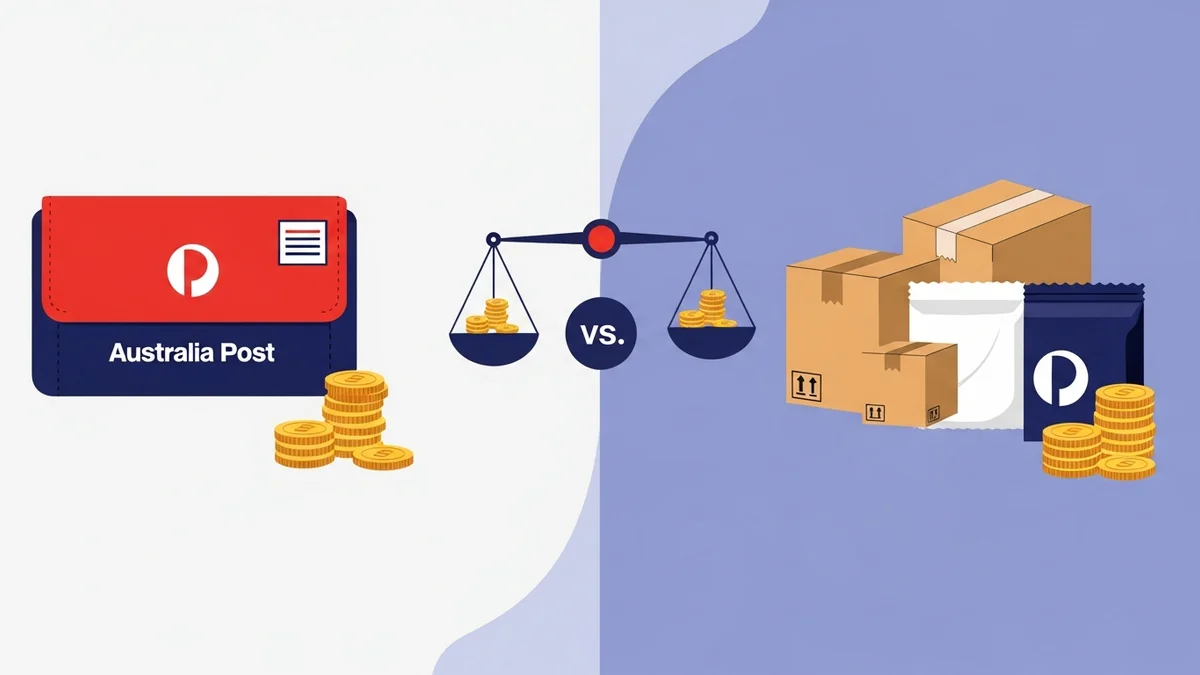
For many WooCommerce store owners, shipping costs represent one of the biggest expenses and a critical factor in profitability. Every dollar saved on packaging and postage directly impacts your bottom line. When sending parcels through Australia Post, a common dilemma arises: should you use their branded satchels or supply your own packaging?
This decision isn't always straightforward. Both options offer distinct advantages and disadvantages that can affect your overall shipping strategy, customer experience, and, most importantly, your expenses. This comprehensive guide will break down the costs, benefits, and ideal use cases for Australia Post satchels versus your own custom packaging, helping you make the most cost-effective choice for your WooCommerce orders.
Understanding Australia Post Satchels
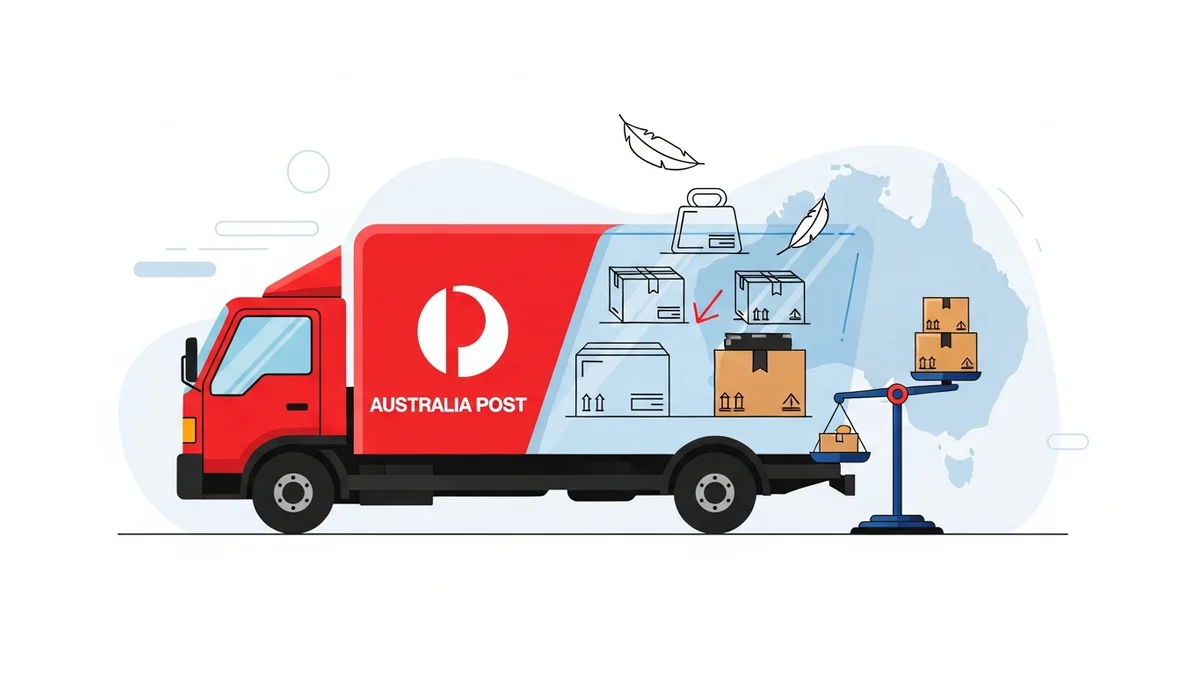
Australia Post satchels are prepaid, branded bags or envelopes designed for ease of use. They come in various sizes and are available for both Standard and Express Post services. When you purchase an Australia Post satchel, you're buying the packaging and the postage service bundled together for a fixed price, provided your item fits and stays within the weight limit for that satchel type.
Pros of Using Australia Post Satchels
- Simplicity and Convenience: They are incredibly easy to use. Just pack your item, attach a label (if not prepaid), and send. This saves time on sourcing and preparing packaging materials.
- Fixed Pricing: The cost is upfront and clear. You know exactly what you'll pay for shipping before you even pack the item, which simplifies pricing for your customers.
- Tracking Included: All Australia Post satchels come with tracking, giving both you and your customers peace of mind.
- No Volumetric Weight Calculations: For the satchel itself, as long as your item fits inside and doesn't exceed the specified weight limit (e.g., 500g, 1kg, 3kg, 5kg), you pay the flat satchel rate, regardless of its exact dimensions within the satchel.
- Accessibility: Easily purchased at post offices, online, or in bulk for business accounts.
Cons of Using Australia Post Satchels
- Limited Sizes: Satchels come in predefined sizes. If your product is an awkward shape, very bulky, or doesn't quite fill the satchel, you might be paying for unused space or struggling to fit it.
- Potentially Higher Cost for Small/Light Items: If you're sending a very small, light item, you might be paying the fixed satchel rate even if the actual postage cost for that item in smaller, custom packaging would be much lower.
- No Custom Branding: You're restricted to Australia Post's branding. This means missing out on an opportunity to reinforce your own brand identity through custom packaging.
- Less Protection: While durable, satchels offer less rigid protection than a box. Fragile items may require significant additional internal padding.
Ideal Use Cases for Australia Post Satchels
Australia Post satchels are a great choice for WooCommerce stores that:
- Sell uniform, non-fragile items that fit well into standard satchel sizes (e.g., clothing, soft goods, small accessories).
- Prioritize convenience and speed in their packing process, especially when starting out or with limited staff.
- Have a consistent shipping volume of similar-sized products.
- Prefer simple, upfront shipping costs without complex calculations.
The Case for Your Own Packaging
Using your own packaging involves sourcing boxes, satchels, void fill, and labels independently. This approach gives you complete control over the packaging materials, design, and dimensions. While it requires more setup and ongoing management, it opens doors for significant cost optimisation and brand building.
Pros of Using Your Own Packaging
- Cost Optimisation: You can choose packaging that perfectly fits your product, minimising wasted space and potentially reducing the volumetric weight. Buying packaging materials in bulk often leads to lower unit costs.
- Custom Branding: Your own packaging is a blank canvas. You can incorporate your logo, brand colours, and marketing messages, enhancing the unboxing experience and reinforcing brand loyalty.
- Flexibility and Protection: You have the freedom to choose materials that best protect your specific products, whether it's a sturdy box for fragile items, a slim poly mailer for apparel, or specialised inserts.
- Sustainability Options: You can opt for eco-friendly packaging materials like recycled cardboard, compostable mailers, or minimal void fill, aligning with your brand's values and customer expectations.
- Reduced Volumetric Weight: By using packaging that snugly fits your items, you can often reduce the parcel's overall dimensions, which directly impacts the cubic weight calculation (more on this below).
Cons of Using Your Own Packaging
- Increased Complexity: Sourcing, purchasing, and storing various packaging materials requires more logistical effort and space.
- Volumetric Weight Calculation: You need to accurately calculate the cubic weight (also known as volumetric weight) for each parcel, as Australia Post charges based on the greater of the actual weight or cubic weight. This adds a step to your shipping process.
- Time and Labour: Packing items with custom materials, especially if they require specific void fill or assembly, can be more time-consuming than simply dropping an item into a prepaid satchel.
- Initial Investment: Buying custom packaging in bulk requires an upfront investment, which might be a barrier for very small businesses.
- Potential for Errors: Incorrectly calculating cubic weight or using sub-optimal packaging can lead to unexpected higher shipping costs or damaged goods.
Ideal Use Cases for Your Own Packaging
Your own packaging is highly beneficial for WooCommerce stores that:
- Sell a diverse range of products with varying sizes, shapes, and fragility levels.
- Want to build a strong brand identity and provide a memorable unboxing experience.
- Have the volume to justify bulk purchasing of packaging materials and the space to store them.
- Are willing to invest time in optimising packaging to reduce overall shipping costs.
- Ship fragile, oversized, or unusually shaped items that don't fit standard satchels.
Key Factors Influencing Cost: Volumetric Weight Explained
When using your own packaging with Australia Post, understanding volumetric weight (also known as cubic weight) is absolutely crucial. Australia Post, like most carriers, charges for a parcel based on whichever is greater: its actual physical weight or its volumetric weight.
How Volumetric Weight Works
Volumetric weight estimates the space a package occupies in a vehicle, rather than its actual mass. It's designed to ensure that carriers are compensated for parcels that are light but bulky. Australia Post calculates volumetric weight using the following formula:
Cubic Weight (kg) = Length (m) x Width (m) x Height (m) x 250
The "250" is a conversion factor that represents 250 kilograms per cubic metre (kg/m³). You must measure your parcel's dimensions in metres (e.g., 0.3m x 0.2m x 0.1m).
Example: A box measuring 30cm x 20cm x 10cm (0.3m x 0.2m x 0.1m) with an actual weight of 0.5kg.
- Cubic Weight = 0.3 x 0.2 x 0.1 x 250 = 1.5 kg
In this scenario, even though the actual weight is only 0.5kg, Australia Post would charge you based on 1.5kg because the cubic weight is greater. This is why right-sizing your packaging is so important.
Other Cost Influencers
- Packaging Material Costs: Compare the unit cost of an Australia Post satchel to the combined cost of your chosen box/mailer, void fill, tape, and labels. Buying in bulk can significantly reduce your per-unit cost for your own materials.
- Labour and Time: Consider the time your staff spends packing. Simple satchels are quick; custom boxes with void fill might take longer. Factor this labour cost into your decision.
- Branding Value: While not a direct shipping cost, custom packaging offers intangible benefits like improved customer perception and repeat business, which can indirectly lead to higher sales.
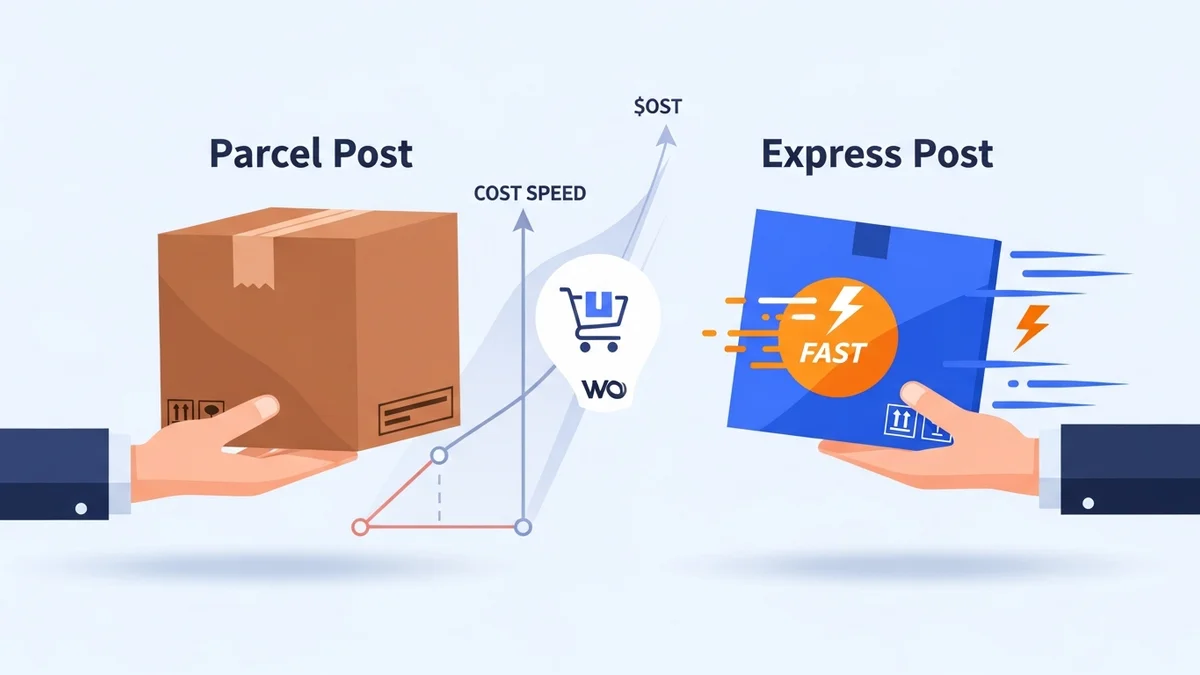
- Shipping Service: Whether you choose Standard Post, Express Post, or Parcel Post also impacts cost. Your packaging choice needs to align with the service level you offer.
- Frequency and Volume: Businesses with high shipping volumes might qualify for discounts on Australia Post rates or get better bulk deals on custom packaging materials.
Calculating the Real Cost: A Practical Approach
To determine the cheapest option, you need to conduct a direct comparison based on your specific products.
Step 1: Determine Your Product's Needs
List your most common products or product bundles. For each, note down:
- Actual Weight (kg)
- Dimensions (Length x Width x Height in cm)
- Fragility (does it need extra protection?)
Step 2: Compare Australia Post Satchel Pricing
For each product, identify the smallest Australia Post satchel it would comfortably fit into. Check the current price for that satchel size (e.g., 500g, 1kg, 3kg, 5kg satchels for Standard or Express Post).
- Example: A T-shirt weighing 0.2kg, 25cm x 20cm x 3cm. It fits in a 500g satchel. Let's assume the 500g satchel costs $9.00.
Step 3: Estimate Own Packaging Costs and Volumetric Weight
Now, consider how you would package the same product using your own materials:
- Choose Packaging: Select an appropriate box or poly mailer that snugly fits the item, plus any necessary void fill (e.g., bubble wrap, shredded paper).
- Measure Packed Dimensions: Once packed, measure the external dimensions of your chosen packaging (Length x Width x Height in metres).
- Calculate Cubic Weight: Use the formula: Length (m) x Width (m) x Height (m) x 250.
- Determine Billable Weight: Compare the item's actual weight (or the total actual weight of the packed item) with the calculated cubic weight. The higher of the two is your "billable weight."
- Find Australia Post Rate: Look up the Australia Post rate for your chosen shipping service (e.g., Parcel Post, Express Post) for that billable weight and the destination zone.
- Add Material Costs: Add the unit cost of your chosen box/mailer, void fill, and any other materials (tape, labels).
Example (Continuing T-shirt): T-shirt (0.2kg, 25x20x3cm). Let's say you use a poly mailer that, once packed, measures 28cm x 22cm x 4cm (0.28m x 0.22m x 0.04m). Cost of poly mailer + label + tape: $0.80.
- Cubic Weight = 0.28 x 0.22 x 0.04 x 250 = 0.616 kg
- Actual Weight = 0.2 kg
- Billable Weight = 0.616 kg (since 0.616kg > 0.2kg)
Now, check Australia Post's rates for a 0.616kg parcel. For simplicity, let's say the rate for a parcel up to 1kg to a standard zone is $8.00.
Total Cost (Own Packaging): $8.00 (postage) + $0.80 (materials) = $8.80
In this T-shirt example, own packaging ($8.80) is slightly cheaper than the Australia Post 500g satchel ($9.00). This difference becomes more significant with higher volumes.
Example 2: Small Electronic Device
Product: Small electronic device, 0.4kg, 15cm x 10cm x 8cm. Fragile, needs a box.
- AP Satchel Option: A 500g satchel would be chosen, costing $9.00. You'd still need to add internal padding, which isn't included.
- Own Packaging Option: You use a small box that, once packed with padding, measures 18cm x 13cm x 10cm (0.18m x 0.13m x 0.10m).
- Cost of box + void fill + label + tape: $1.50
- Actual weight = 0.4kg
- Cubic Weight = 0.18 x 0.13 x 0.10 x 250 = 0.585 kg
- Billable Weight = 0.585 kg
In this case, the AP satchel might seem cheaper at $9.00, but it might not provide sufficient protection for a fragile item without additional material cost, which would push its total cost higher. The custom box ensures protection, but comes with a slightly higher combined cost in this specific example.
Example 3: Bulky, Light Item
Product: Large, fluffy cushion cover, 0.3kg, 40cm x 40cm x 5cm.
- AP Satchel Option: A 3kg satchel (large size) would be needed for dimensions, even though it's light. Let's assume a 3kg satchel costs $14.00.
- Own Packaging Option: A poly mailer that, once packed, measures 42cm x 42cm x 6cm (0.42m x 0.42m x 0.06m).
- Cost of poly mailer + label + tape: $1.20
- Actual weight = 0.3kg
- Cubic Weight = 0.42 x 0.42 x 0.06 x 250 = 2.646 kg
- Billable Weight = 2.646 kg
Here, using your own right-sized poly mailer ($13.20) is cheaper than the Australia Post 3kg satchel ($14.00), primarily because the satchel forces you into a higher weight bracket for its dimensions, even if the item is very light.
When to Choose Australia Post Satchels
Australia Post satchels are the optimal choice for your WooCommerce store if:
- Your Products are Uniform: Items that consistently fit perfectly into one of the standard satchel sizes (e.g., t-shirts, books, small gadgets).
- Convenience is Key: You want a quick, hassle-free packing process without worrying about sourcing materials or calculating cubic weight.
- You're Starting Out: For new businesses, satchels simplify shipping logistics, allowing you to focus on sales and product development.
- High Volume of Identical Shipments: If you send hundreds of the exact same product that fits a satchel, the efficiency can outweigh minor cost differences.
- Non-Fragile Items: Products that don't require rigid protection and are suitable for a flexible satchel.
When to Choose Your Own Packaging
Opt for your own packaging when your WooCommerce business:
- Sells Diverse Products: You have a wide range of items with varying sizes, shapes, and fragility that don't fit standard satchels well.
- Prioritises Brand Experience: You want to create a memorable unboxing experience with custom branding and materials.
- Aims for Cost Optimisation: You're willing to invest time in analysing cubic weight and sourcing custom packaging to achieve the lowest possible shipping cost per parcel.
- Ships Fragile or Unique Items: Products that require specific protective packaging or custom inserts.
- Has Volume for Bulk Buys: Your shipping volume is high enough to make bulk purchases of packaging materials cost-effective.
- Values Sustainability: You want to choose eco-friendly packaging materials that align with your brand's values.
The Hybrid Approach: Best of Both Worlds
Many successful WooCommerce stores adopt a hybrid strategy. This means using Australia Post satchels for certain products or scenarios while opting for custom packaging for others. For example:
- Satchels for bestsellers: Use AP satchels for your consistently selling, uniform items that fit well.
- Custom for unique items: Use your own boxes for fragile, oversized, or high-value items that benefit from tailored protection and branding.
- Flexibility for promotions: Quickly use AP satchels for flash sales or new product launches, then transition to optimised custom packaging once demand stabilises.
This approach allows you to balance the convenience of pre-paid satchels with the cost-saving and branding benefits of custom packaging.
Tips for Reducing Packaging Costs (Regardless of Choice)
No matter which packaging route you take, there are always ways to refine your strategy and reduce overall shipping costs:
- Right-Size Your Packaging: This is the golden rule. Use the smallest possible packaging that safely and securely fits your item. Minimising empty space reduces both material costs and volumetric weight.
- Buy in Bulk: Whether it's Australia Post satchels (if you have an account) or your own boxes and mailers, purchasing in larger quantities almost always leads to lower per-unit costs.
- Negotiate with Suppliers: If you're a high-volume sender using your own packaging, reach out to multiple packaging suppliers for quotes and don't be afraid to negotiate.
- Minimize Void Fill: Use only as much void fill as necessary to prevent movement and protect your product. Air pillows are often lighter and more cost-effective than excessive paper or peanuts.
- Lightweight Materials: Opt for lightweight yet durable packaging materials. Every gram adds up, especially for high-volume shipping.
- Review Australia Post Business Options: If you have an Australia Post business account, explore their tailored pricing and solutions, which can offer better rates than standard retail pricing.
Related Articles
Continue your learning with these related resources:
- The Complete Guide to Managing Australia Post Shipping for Your WooCommerce Store (Comprehensive Guide)
- How Volumetric Weight Affects Your Australia Post Costs for WooCommerce Shipments
- Return to Sender vs. Abandon: Optimizing Australia Post Undeliverable Options for WooCommerce
- How to Reduce Packaging Weight to Lower Your Australia Post Costs for WooCommerce Orders
- Navigating Australia Post Dangerous Goods Rules for WooCommerce Stores
- How to Communicate Australia Post Delivery Delays to Your WooCommerce Customers
Conclusion
Deciding between Australia Post satchels and your own packaging for WooCommerce orders isn't a one-size-fits-all answer. It's a strategic decision that requires careful consideration of your product range, shipping volume, brand identity, and operational efficiency. While Australia Post satchels offer unparalleled convenience and simplicity, your own packaging often provides greater cost optimisation, flexibility, and branding opportunities.
The key is to perform a detailed cost analysis for your specific products, factoring in both material costs and Australia Post's volumetric weight calculations. Don't be afraid to adopt a hybrid approach, leveraging the strengths of both options. By actively managing your packaging choices, you can significantly reduce your shipping expenses, enhance your customer's unboxing experience, and ultimately boost the profitability of your WooCommerce store.