Introduction
In the fast-paced world of e-commerce, a smooth checkout experience is paramount. Customers expect to see reliable shipping options instantly. Yet, beneath the surface, your online store relies heavily on external shipping carrier APIs to provide real-time rates and services. When these APIs fail, your business suffers immediately, often without you even knowing until a customer complains.
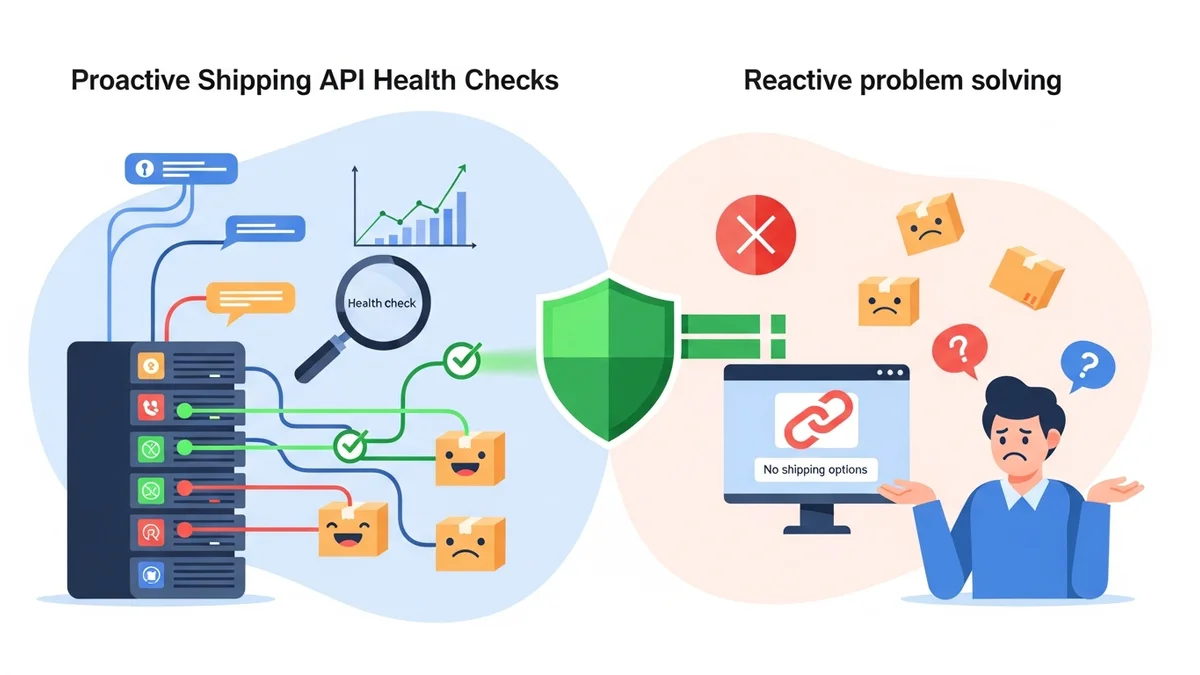
The shift from a reactive approach (fixing problems after they've impacted sales) to a proactive one (detecting and handling issues automatically) is crucial for any successful e-commerce operation. This article explores how shipping API health checks can be your first line of defence, catching problems before they ever reach your customers and safeguarding your revenue and reputation.
The Silent Threat: Why Shipping APIs Fail
Shipping APIs, though vital, are external services beyond your direct control. They can fail for a multitude of reasons, often without obvious symptoms. These failures can manifest as "no shipping options available" messages at checkout, leading to abandoned carts and frustrated customers.
Common culprits behind these disruptions include:
- Carrier Outages: Temporary server issues or maintenance from the shipping carrier itself.
- Network Problems: Connectivity issues between your server and the carrier's API.
- Plugin Using a Retired Endpoint: Carriers periodically retire old API endpoints when transitioning to new ones. If your shipping plugin isn't updated to use the current endpoint, it will fail to connect. This happened with Australia Post's PAC API in April 2026, Australia Post retired their old endpoint after running both old and new endpoints during a transition period. The official Australia Post Shipping Method for WooCommerce plugin, even at its latest version, wasn't updated to use the current endpoint. Sauce Code identified the root cause and notified the plugin developers, prompting the fix.
- Plugin Conflicts or Misconfigurations: Issues within your WooCommerce setup or shipping plugin settings.
- Rate Limit Exceedance: Too many requests to the API in a short period, leading to temporary blocks.
The most insidious failures are those that occur silently. Your website might appear functional, but critical backend processes, like fetching shipping rates, are breaking. Without proactive WooCommerce shipping monitoring, you're flying blind, waiting for customer complaints to signal a problem.
Reactive vs. Proactive: The Cost of Waiting
The difference between a reactive and proactive approach to shipping API health can dramatically impact your business's bottom line and customer loyalty.
The Reactive Approach: Discovering Problems After the Fact
Many e-commerce store owners operate reactively when it comes to shipping. They only discover an API issue when:
- Customers contact support complaining about no shipping options.
- Abandoned cart rates suddenly spike.
- Negative reviews about checkout problems start appearing.
This approach comes with significant costs:
- Lost Revenue: Every customer who encounters a shipping error is a potential lost sale. They abandon their cart, possibly never to return.
- Damaged Reputation: Frustrated customers may share their negative experiences, harming your brand's image and trust.
- Increased Support Load: Your customer service team spends valuable time troubleshooting and apologising, instead of focusing on sales.
- Operational Stress: Scrambling to identify and fix a critical issue under pressure leads to stress and potential for further errors.
Imagine a major sale event. If a shipping API becomes unreachable for just a few hours, the financial impact can be devastating. You're not just losing those immediate sales; you're losing the lifetime value of those potentially new customers.
The Proactive Approach: Detecting and Handling Problems Automatically
A proactive approach means you're not waiting for customer complaints. Instead, you're actively monitoring your shipping APIs, identifying potential issues, and in some cases, even mitigating them before they affect your customers.
This is where proactive shipping monitoring and WooCommerce health checks for shipping come into play. By continuously verifying the status of your shipping carrier APIs, you gain the ability to:
- Prevent Revenue Loss: Keep your checkout functioning smoothly, ensuring customers can complete their purchases.
- Maintain Customer Trust: Deliver a consistent, reliable shopping experience that builds loyalty.
- Protect Brand Reputation: Avoid the negative fallout of frustrated customers and abandoned carts.
- Reduce Operational Overheads: Minimise the time and resources spent on crisis management and customer support for API issues.
- Gain Peace of Mind: Know that your shipping infrastructure is being monitored, allowing you to focus on growing your business.
Moving from reactive to proactive monitoring transforms a potential crisis into a manageable event, often resolved before anyone outside your operations team even notices.
What Are Shipping API Health Checks?
Shipping API health checks are essentially automated, scheduled diagnostic tests that verify the operational status of your shipping carrier's API endpoints. Instead of waiting for a customer to trigger a rate request at checkout, these checks regularly ping the API to ensure it's alive, responsive, and returning valid data.
Here's how they typically work:
- Scheduled Intervals: Health checks run automatically at configurable intervals — every hour, every six hours, every twelve hours, or daily. This continuous vigilance means problems are detected quickly, day or night.
- Lightweight Requests: Rather than performing a full, complex rate calculation, health checks typically send a simple, lightweight API request. For an Australia Post PAC API, for example, this might be a basic service listing query. The goal is to verify that the API endpoint is responding correctly and returning an expected, healthy status code (e.g., HTTP 200 OK).
- Status Verification: The system analyses the API's response. If it receives an error code (like a 404 Not Found, 500 Internal Server Error, or a timeout), or if the response content is unexpected, the health check is deemed to have failed.
These checks operate in the background, providing a constant pulse on the health of your external shipping dependencies. They are an early warning system, designed to detect issues, including when your plugin is using a retired endpoint, long before a customer attempts to place an order.
The Benefits of Proactive Shipping Monitoring
Implementing a robust system for shipping API health checks offers a multitude of benefits that directly impact your store's performance and customer satisfaction.
- Prevent Revenue Loss: The most immediate benefit is safeguarding sales. If a shipping API becomes unreachable, customers often see "no shipping options available" and abandon their carts. Proactive monitoring keeps your checkout functioning, ensuring customers can complete their purchases.
- Enhance Customer Trust: A reliable checkout experience builds confidence. When customers consistently find available shipping options, they trust your store to deliver, leading to repeat business and positive word-of-mouth.
- Protect Brand Reputation: Avoid the frustration and negative sentiment associated with checkout errors. Early detection means you can address issues before they lead to public complaints or poor reviews, preserving your brand's image.
- Reduce Operational Stress: Instead of firefighting critical issues discovered by angry customers, your team receives timely alerts, allowing for calm, organised problem-solving. This shifts your operations from reactive chaos to proactive management.
- Gain Early Warning and Time to React: Health checks provide immediate alerts (e.g., via email) the moment an API issue is detected. This gives you invaluable time to investigate, consider activating a fallback shipping method (like a flat rate), or communicate transparently with customers about potential delays.
- Identify Intermittent Issues: Some API problems are not constant but occur sporadically. Scheduled health checks can catch these fleeting issues that might be missed during manual checks or during specific low-traffic periods, providing a more complete picture of API reliability.
Ultimately, proactive shipping monitoring ensures that your shipping infrastructure is a robust asset, not a hidden liability, supporting seamless transactions and fostering customer loyalty.
Implementing Proactive Monitoring: Key Features to Look For
To effectively implement proactive shipping monitoring, your chosen solution needs a specific set of features that provide comprehensive coverage and actionable insights. When considering a tool for WooCommerce health checks for shipping, look for these capabilities:
- Automated Scheduled Checks: The core of proactive monitoring. The system should run health checks automatically at regular, configurable intervals (e.g., hourly, every 6 hours, daily) to provide continuous vigilance without manual intervention.
- Instant, Detailed Alerts: When an issue is detected, you need to know immediately. The system should send email alerts that include crucial information: the affected shipping provider, the specific endpoint that failed, the HTTP response code, error details, and a direct link to the provider's settings for quick investigation. Alert rate-limiting (e.g., configurable cooldown periods) is also essential to prevent inbox flooding during sustained outages.
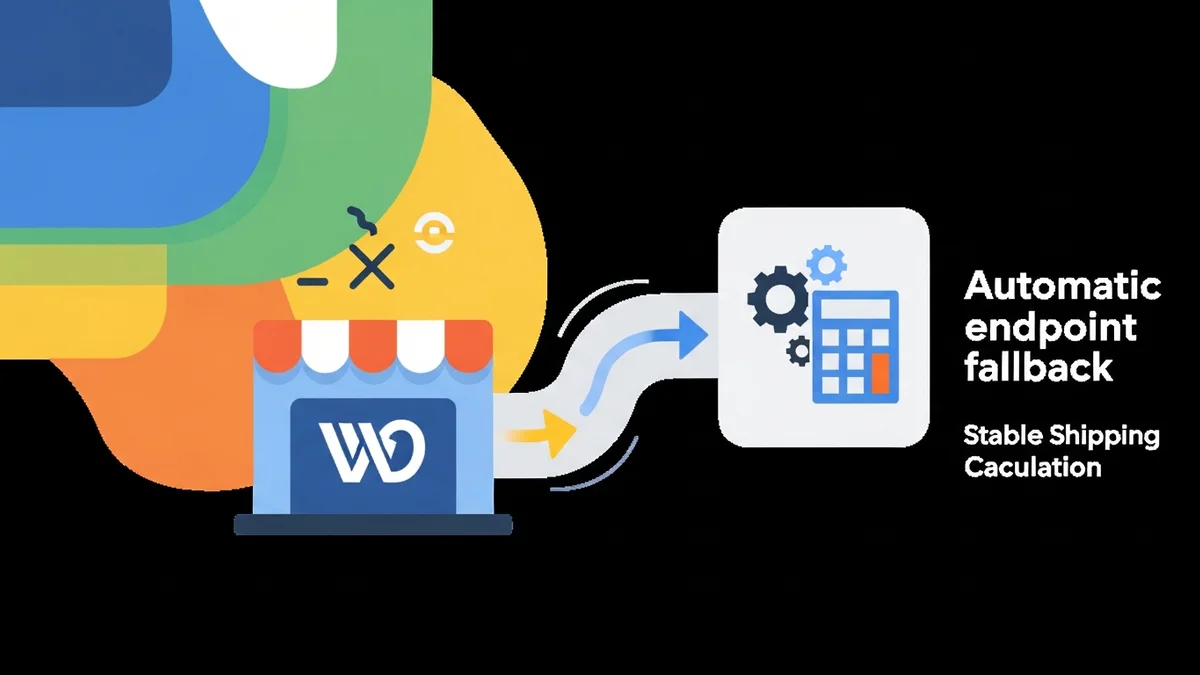
- Automatic Fallback (as a safety net): A critical feature for maintaining checkout functionality. In scenarios where your plugin is using a retired endpoint but an alternative is available, as happened in April 2026 when Australia Post retired their old PAC API path, a good monitoring tool should attempt to cycle through previously known, working endpoints. This automatic shipping fallback for WooCommerce can buy you crucial time, keeping your checkout alive while you investigate and apply a permanent solution. If all fallback attempts fail, you should still receive an immediate alert.
- Comprehensive Logging and Event History: Every health check, alert, fallback attempt, and recovery event should be logged. This provides a detailed historical record, allowing you to analyse trends, pinpoint recurring issues, and verify that problems were detected and handled correctly.
- Intuitive Management Interface: A clear dashboard providing an at-a-glance status for each shipping provider (healthy, fallback active, down) is invaluable. Easy access to per-provider settings for monitoring, alerts, and fallback behaviour is also key.
- Recovery Detection: The system should not only detect failures but also recognise when an API has recovered. This allows it to restore the provider to a "healthy" status and send a recovery alert, informing you that the issue has been resolved.
These features combine to create a robust, automated defence against shipping API disruptions, empowering you to maintain a reliable e-commerce experience.
Real-World Impact: Scenarios Where Health Checks Save the Day
Let's look at practical examples where proactive shipping API health checks, especially with a tool like WooCommerce Shipping Monitor Pro, make a tangible difference.
Scenario 1: Plugin Using a Retired Endpoint (Australia Post PAC API)
Imagine Australia Post retires their old PAC API endpoint at /api/postage/, completing a transition to the current endpoint at /postage/. This exact scenario happened in April 2026. Australia Post had responsibly run both endpoints during the transition period, giving plugin developers time to update. However, the official Australia Post Shipping Method for WooCommerce plugin, even at its most up-to-date version, wasn't updated to use the current endpoint. Sauce Code identified the root cause and notified the plugin developers, prompting the fix.
Without monitoring: Your customers suddenly see "no shipping options available" at checkout. They abandon their carts. You only find out hours later, or even days, when complaints roll in. By then, significant revenue is lost, and customer trust is eroded.
With WooCommerce Shipping Monitor Pro: The plugin's scheduled health check, or even the first customer checkout request, immediately detects the connectivity failure. You receive an instant email alert detailing the HTTP error and the affected endpoint. As a last-resort safety net, the plugin attempts to cycle through previously known endpoints. If the current /postage/ endpoint is one of the known fallbacks, your checkout may continue to function, buying you crucial time while you investigate and await a plugin update. If all known endpoints fail, you receive an "All Endpoints Failing" alert, prompting you to enable a manual fallback like a flat-rate shipping method.
Scenario 2: Temporary Carrier Outage During a Peak Sale
It's the busiest weekend of your annual sale, and the Australia Post API experiences a temporary, intermittent outage, returning 500 server errors.
Without monitoring: Hundreds of customers during your peak sale hours are unable to complete purchases. Each "no shipping options" message is a lost sale, potentially turning away new customers for good. You're unaware of the problem until your support inbox fills up.
With WooCommerce Shipping Monitor Pro: The plugin detects the intermittent 500 errors during scheduled health checks or actual checkout requests. You receive immediate "Health Check Failed" or "Fallback Triggered" alerts. If the issue is carrier-wide and all known fallback endpoints also fail, you get an "All Endpoints Failing" alert. This allows you to quickly enable a temporary flat-rate shipping option, ensuring sales can continue. When the API recovers 40 minutes later, the plugin detects the recovery and sends a "Recovered" alert, allowing you to revert to real-time rates.
Scenario 3: Proactive Detection Overnight
At 3 AM, a scheduled health check detects that the Australia Post API endpoint is returning errors. This happens long before your typical business hours begin.
Without monitoring: The problem persists until a customer tries to checkout at 9 AM, discovering the issue for themselves. You start your day with a problem already impacting sales.
With WooCommerce Shipping Monitor Pro: The 3 AM health check fails. The plugin logs the failure, attempts fallback (which also fails in this scenario), marks the provider as "down," and sends an "All Endpoints Failing" email alert. You wake up at 7 AM to an email informing you of the issue, complete with error codes. This gives you a two-hour head start to investigate the Australia Post API status page and prepare a response, all before your first customer encounters a problem.
These scenarios highlight how proactive monitoring transforms potential disasters into manageable situations, preserving revenue and enhancing customer satisfaction.
Choosing the Right Tool for WooCommerce Shipping Monitoring
For WooCommerce store owners seeking to implement proactive shipping monitoring, the WooCommerce Shipping Monitor Pro plugin by SauceCode offers a purpose-built solution. It's designed to protect your store from the very issues discussed in this article, focusing on the external API dependencies of your shipping plugins.
Here's how WooCommerce Shipping Monitor Pro helps you move from reactive to proactive:
- Targeted API Monitoring: It specifically monitors the external API endpoints that your WooCommerce shipping plugins depend on, such as the Australia Post PAC API. It's not about calculating rates or printing labels; it's about ensuring the underlying service is reachable.
- Immediate Email Alerts: You receive instant HTML-formatted email alerts the moment an API becomes unreachable, a fallback is triggered, all endpoints are down, or an API recovers. These alerts include essential details like the provider, endpoint, HTTP response code, and a direct link to the provider's admin page. Configurable alert cooldowns prevent inbox flooding.
- Scheduled Health Checks: The plugin runs scheduled health checks against each monitored API via WordPress native cron at configurable intervals (every hour, every 6 hours, every 12 hours, or daily). This catches problems proactively, often before your customers even notice.
- Automatic Fallback (Last-Resort Safety Net): As a crucial safety net, it attempts to cycle through previously known, working API endpoints when the active one fails. While not guaranteed to fix all problems (e.g., a carrier-wide outage), it may help keep your checkout operational when your plugin is using a retired endpoint, buying you time to apply a permanent fix.
- Comprehensive Logging and Dashboard: Every health check, alert, fallback attempt, and recovery is logged to a custom database table. You get a full event history per provider in the WordPress admin, alongside a dashboard for quick status overviews and recent events.
- Independent Provider Settings: While version 1.0.0 currently supports only Australia Post, the plugin's architecture allows each shipping carrier ('provider') to have its own monitoring, alerts, event log, and settings, allowing for tailored configuration as additional providers are added in future versions.
WooCommerce Shipping Monitor Pro acts as your store's vigilant guardian, ensuring that critical shipping API dependencies are always working. It empowers you with the knowledge and, in some cases, the temporary solution to keep your checkout running smoothly, even when external services falter.
Related Articles
Continue your learning with these related resources:
- Why WooCommerce Shipping Breaks (And How to Stop It From Costing You Sales) (Comprehensive Guide)
- The Real Cost of Shipping Downtime for WooCommerce Stores
- Why "Set and Forget" Doesn't Work for WooCommerce Shipping Plugins
- What Automatic Endpoint Fallback Means for Your WooCommerce Store
- How to Get Email Alerts When Your WooCommerce Shipping API Has Issues
- Your WooCommerce Shipping Reliability Checklist for Peak Season
Conclusion
In the competitive e-commerce landscape, an uninterrupted customer journey is a non-negotiable asset. Shipping API failures, often silent and unpredictable, pose a significant threat to your sales, reputation, and customer loyalty. Relying on customer complaints to uncover these issues is a costly, reactive strategy that no modern online store can afford.
By implementing proactive shipping monitoring through dedicated API health checks, you transform potential crises into manageable events. Tools like WooCommerce Shipping Monitor Pro provide the critical intelligence and safety nets needed to detect problems instantly, alert you with actionable details, and even provide temporary workarounds. This ensures your customers always see available shipping options, protecting your revenue and fostering a seamless, trustworthy shopping experience. Invest in proactive monitoring today to secure your store's future.