Introduction
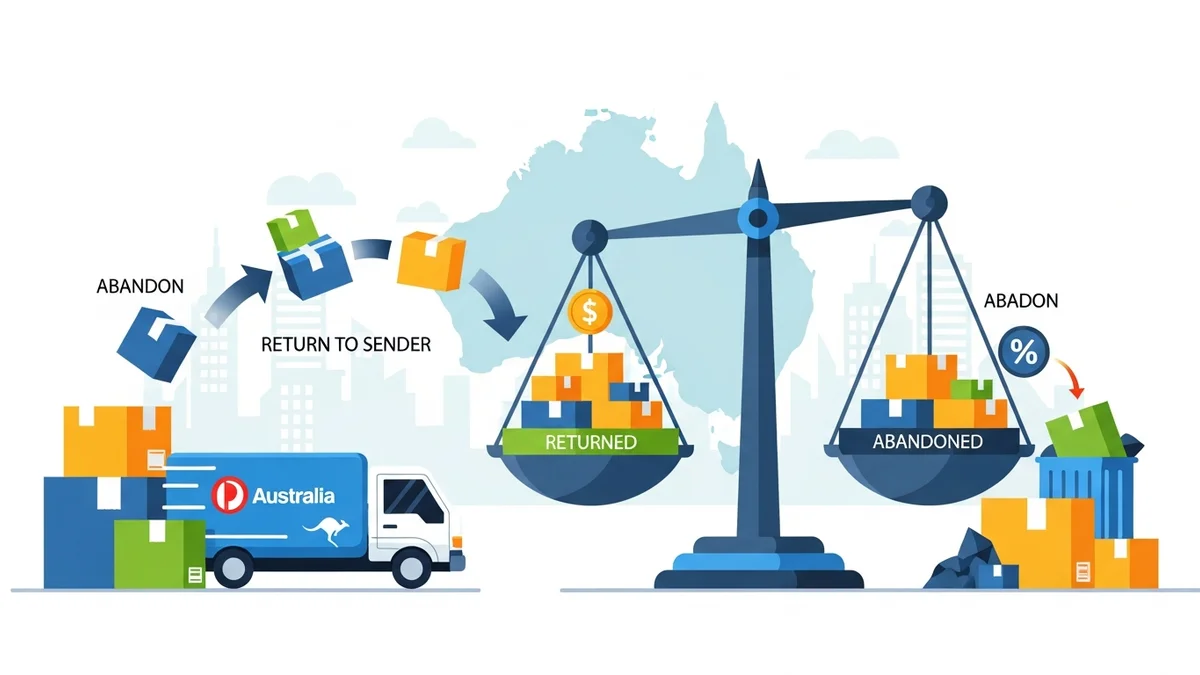
In the dynamic world of e-commerce, every parcel sent carries not just products, but also customer expectations and your business's bottom line. However, the reality of undeliverable shipments – due to incorrect addresses, failed delivery attempts, or customer refusal – is an inevitable challenge for WooCommerce merchants. When a parcel cannot be successfully delivered, Australia Post presents two primary options: Return to Sender (RTS) or Abandon.
The choice between these two options is not merely logistical; it's a critical strategic decision that profoundly impacts your operational efficiency, inventory management, customer satisfaction, and ultimately, your profitability. This article will guide e-commerce managers through a comprehensive analysis of each option, offering expert recommendations and actionable insights to help you build a robust returns process that protects margins and fosters customer loyalty.
Understanding Undeliverable Parcels
Before diving into solutions, it's essential to understand why parcels become undeliverable. Identifying the root causes can help implement preventative measures, reducing the frequency of such occurrences. Common reasons include:
- Incorrect or Incomplete Addresses: The most frequent culprit, often due to customer input errors or system glitches.
- Recipient Unavailable: Multiple failed delivery attempts where the recipient isn't present to receive the parcel.
- Unclaimed Parcels: Items held at a Post Office or depot that are not collected within the specified timeframe.
- Refused Delivery: The recipient declines to accept the parcel, sometimes due to a change of mind or an unexpected delivery.
- Customs Issues: For international shipments, delays or rejections due to customs regulations, unpaid duties, or prohibited items.
Each undeliverable parcel represents a potential loss, not just of the product's value but also of shipping costs, administrative effort, and a potential hit to customer satisfaction. Proactive management of these scenarios is key to turning a potential cost centre into a refined operational process.
Australia Post's Undeliverable Options Explained
When an item is deemed undeliverable, Australia Post's standard operating procedure dictates how it will be handled. Your pre-defined preferences, often set up via your shipping carrier agreement or integrated shipping solutions, determine the default action. Understanding these options is the first step towards an optimized strategy.
Return to Sender (RTS): Recovering Your Assets
Choosing the Return to Sender (RTS) option means that once Australia Post determines a parcel is undeliverable, it will be sent back to your nominated return address. This process involves additional logistics and associated costs but allows for product recovery.
Benefits of Return to Sender
- Inventory Recovery: The primary advantage is getting your product back. For high-value goods, unique items, or products with good resale potential, this is crucial for recouping losses.
- Customer Service Opportunity: Receiving the item back allows you to initiate a refund, offer store credit, or even re-ship the item to a corrected address, turning a negative experience into a positive resolution.
- Quality Control: Upon return, you can inspect the item for damage, ensuring that if it's resold, it meets your quality standards. This also helps in identifying potential packaging issues.
- Data Collection: Returned items provide valuable data on reasons for non-delivery, helping you refine address validation, packaging, or carrier instructions.
Costs and Considerations for RTS
- Return Shipping Fees: Australia Post will charge for the return journey, often at a rate similar to or even higher than the original outbound shipping fee. These charges can quickly erode product margins, especially for heavier or bulkier items.
- Processing Overhead: Once returned, the item needs to be received, inspected, cleaned, potentially repackaged, and restocked. This involves staff time, warehouse space, and administrative effort.
- Time Delay: The return journey can take time, delaying resolution for the customer and tying up capital in transit.
- Condition of Returned Goods: There's no guarantee the item will return in resalable condition, especially if it's been handled multiple times or poorly packaged.
When to Opt for Return to Sender
RTS is generally the preferred option for:
- High-Value Products: Items where the cost of the product significantly outweighs the return shipping and processing fees.
- Unique or Limited Edition Items: Products that are difficult to replace or have high demand.
- Items with High Resale Value: Goods that can be easily cleaned, repackaged, and sold again, especially if they are not significantly devalued by being opened or handled.
- Customer-Centric Policies: If your brand prioritises customer satisfaction above all else, offering a refund or reshipment upon return can be a strong loyalty driver.
- Inventory Management: When accurate inventory counts are crucial for your business model, recovering stock is paramount.
Abandon: Minimising Immediate Costs
Choosing to Abandon an undeliverable parcel means you instruct Australia Post to dispose of the item. This option signifies a complete relinquishment of your ownership and control over the product once it's deemed undeliverable.
Benefits of Abandon
- No Return Shipping Costs: The most significant financial advantage is avoiding the return shipping fees, which can be substantial for certain items or routes.
- Reduced Processing Overhead: You eliminate the need for staff time, warehouse space, and administrative effort associated with receiving, inspecting, and restocking returned goods.
- Faster Resolution: While the product is lost, the decision point is quicker, potentially leading to faster refunds or replacements for customers (if you choose to offer them without the item returning).
- Streamlined Logistics: Simplifies your reverse logistics process by removing a step, especially beneficial for businesses with high volumes of low-value items.
Costs and Considerations for Abandon
- Complete Loss of Product Value: This is the primary drawback. You lose the entire cost of goods sold for the abandoned item.
- Original Shipping Cost Loss: The initial outbound shipping cost is also a sunk cost, adding to the total loss.
- Environmental Impact: Abandoning items contributes to waste, which can be a concern for environmentally conscious brands and customers.
- Customer Experience Risk: If not communicated transparently, abandoning a product without offering a clear resolution (refund or replacement) can lead to significant customer dissatisfaction.
When to Opt for Abandon
Abandoning an undeliverable parcel makes strategic sense in specific scenarios:
- Low-Value Products: Items where the return shipping cost and processing fees would exceed the product's wholesale or even retail value. For example, a $5 accessory that costs $10 to return and $5 to process makes no financial sense to recover.
- Bulky or Heavy Items: Products with high shipping weight or dimensions, where return freight charges are prohibitive.
- Perishable Goods: Items with a limited shelf life that would spoil during the return transit time, rendering them unsalable anyway.
- Damaged or Non-Resalable Items: If an item is already known to be damaged or highly unlikely to be resold even if returned (e.g., custom-made, personalised, or hygiene-sensitive products).
- High Volume, Low Margin Businesses: For operations where the cost of processing individual returns significantly impacts overall profitability.
Key Factors Influencing Your Decision
Choosing between RTS and Abandon requires a data-driven approach, considering various business metrics and operational realities. E-commerce managers should develop a clear policy based on these factors:
Product Value and Profit Margins
This is arguably the most critical factor. Calculate the landed cost of the product (cost of goods + inbound freight + customs) and compare it against the estimated return shipping fee and processing costs. For a high-margin item, RTS is often viable. For low-margin items, the cumulative costs of return often make abandonment the more financially prudent choice.
Example: A handcrafted artisan vase costing $150 with a 60% margin ($90 profit) is worth returning even if return shipping is $25. A mass-produced phone case costing $10 with a 20% margin ($2 profit) is likely better abandoned if return shipping is $10 or more.
Return Shipping and Handling Costs
Obtain clear estimates from Australia Post for return shipping. Factor in the labour cost for receiving, inspecting, repacking, and restocking. Use a standardised cost per return transaction to accurately assess the financial impact of RTS. If these costs approach or exceed the product's net value, abandon becomes a strong contender.
Product Condition and Resalability
Consider the likelihood of the product being returned in a condition suitable for resale. Perishables, easily damaged items, or products with hygiene seals that are likely to be broken (e.g., cosmetics, intimate apparel) often aren't worth the return effort. Assess if the item can be refurbished or repackaged cost-effectively.
Customer Experience and Brand Reputation
While cost is vital, customer perception is equally important. How you handle undeliverable items reflects on your brand. A clear, transparent policy, even if it results in abandonment for certain items, is better than ambiguity. If a customer genuinely wants the item and it was an address error on their part, offering a re-shipment (potentially with a new shipping charge) after an RTS can save the sale and the relationship.
Actionable Tip: Clearly state your policy for undeliverable items in your FAQs and shipping policy. Inform customers about potential re-shipping fees or the process for refunds if an item is returned or abandoned.
Operational Capacity and Efficiency
Do you have the warehouse space and staff to efficiently process returns? For smaller businesses, a high volume of returns can strain resources, making abandonment attractive for low-value items to free up operational bandwidth. Automating parts of the returns process within WooCommerce (e.g., status updates, refund triggers) can mitigate some of this burden.
Environmental and Sustainability Goals
For brands committed to sustainability, abandoning products creates waste. While the financial impact might favour abandonment, the environmental footprint could be a significant factor. Explore options for donating abandoned goods to charity if allowed, or recycling components, rather than outright disposal, if a return is not feasible.
Integrating Undeliverable Options with WooCommerce
Managing undeliverable parcels effectively requires more than just making a policy choice; it demands seamless integration with your WooCommerce store and operational workflows.
Automated Notifications and Status Updates
Utilise WooCommerce extensions or custom development to track Australia Post notifications regarding undeliverable items. Automate internal alerts and customer communications when a parcel is marked as undeliverable. Update the order status in WooCommerce to "Undeliverable" or "Awaiting Resolution" to keep your team informed.
Practical Example: A plugin could automatically change an order status to "Undeliverable - Action Required" and trigger an email to your customer service team when an Australia Post tracking event indicates a return initiated.
Managing Refunds and Reshipments
Your chosen undeliverable option dictates the refund/reshipment process:
- For RTS: Once the item is received and inspected, process a refund (minus original shipping and return shipping fees, as per your policy) or coordinate a reshipment. Update the order in WooCommerce with notes and a new tracking number if applicable.
- For Abandon: If you've chosen to abandon a low-value item, you might proactively issue a refund (minus original shipping) or offer store credit, even without the item returning. This can pre-empt customer complaints and manage expectations.
Ensure your WooCommerce system allows for partial refunds and easy order editing to reflect these scenarios accurately.
Data Analysis and Reporting
Track the frequency and reasons for undeliverable parcels. Integrate this data into your analytics to identify trends. Are certain products more prone to undeliverability? Are specific regions or address types problematic? This data can inform improvements to your checkout address validation, packaging, or carrier selection.
Best Practices for Preventing and Managing Undeliverable Shipments
Prevention is always better than cure. Implement these best practices to minimise undeliverable parcels and streamline their management:
- Robust Address Validation: Integrate a real-time address validation service at the WooCommerce checkout. Tools that connect to Australia Post's address database can significantly reduce errors.
- Clear Shipping Policies: Publish a comprehensive and easily accessible shipping policy that outlines what happens if a parcel is undeliverable, including who bears the cost for return shipping or reshipment.
- Proactive Customer Communication: Send automated shipping notifications with tracking links. Encourage customers to track their parcels and provide options for managing delivery (e.g., "leave safe" instructions, redirection) where Australia Post permits.
- Customer Service Training: Equip your support team with clear guidelines and scripts for handling inquiries about undeliverable parcels, ensuring consistent and empathetic responses.
- Regular Policy Review: Periodically review your RTS vs. Abandon policy based on product changes, shipping cost fluctuations, and customer feedback. Adapt your strategy to maintain optimal profitability and customer satisfaction.
- Segmented Approach: Don't adopt a one-size-fits-all policy. Implement rules based on product category, value, or weight. For instance, all items over $X value are RTS, while those under are abandoned.
Related Articles
Continue your learning with these related resources:
- The Complete Guide to Managing Australia Post Shipping for Your WooCommerce Store (Comprehensive Guide)
- How Volumetric Weight Affects Your Australia Post Costs for WooCommerce Shipments
- How to Reduce Packaging Weight to Lower Your Australia Post Costs for WooCommerce Orders
- Navigating Australia Post Dangerous Goods Rules for WooCommerce Stores
- How to Communicate Australia Post Delivery Delays to Your WooCommerce Customers
- How to Handle WooCommerce Returns Without Losing Money on Each Reverse Shipment
Conclusion
The decision between "Return to Sender" and "Abandon" for undeliverable Australia Post parcels is a nuanced one for WooCommerce merchants. It's a strategic choice that directly impacts your operational costs, inventory recovery, and customer relationships. By thoroughly evaluating product value, return logistics costs, resalability, and customer experience implications, you can establish clear, data-driven policies that protect your margins and enhance your brand reputation.
Implementing robust address validation, proactive customer communication, and a well-defined returns process integrated with your WooCommerce store are crucial steps. This approach transforms the challenge of undeliverable shipments from a reactive cost centre into a managed process that contributes to overall business efficiency and customer loyalty. Make informed choices, and turn potential losses into opportunities for operational excellence.