Introduction
For WooCommerce store owners in Australia, managing shipping costs is a critical part of running a profitable business. Australia Post's pricing structure heavily relies on the weight and size of your parcels. Even small changes to your packaging can lead to significant savings over time, directly impacting your bottom line.
Many merchants overlook the impact of their packaging choices on the final shipping price. This article will guide you through practical steps to reduce packaging weight and optimise parcel dimensions, ensuring you pay less for every Australia Post shipment.
Understanding Australia Post's Weight-Based Pricing
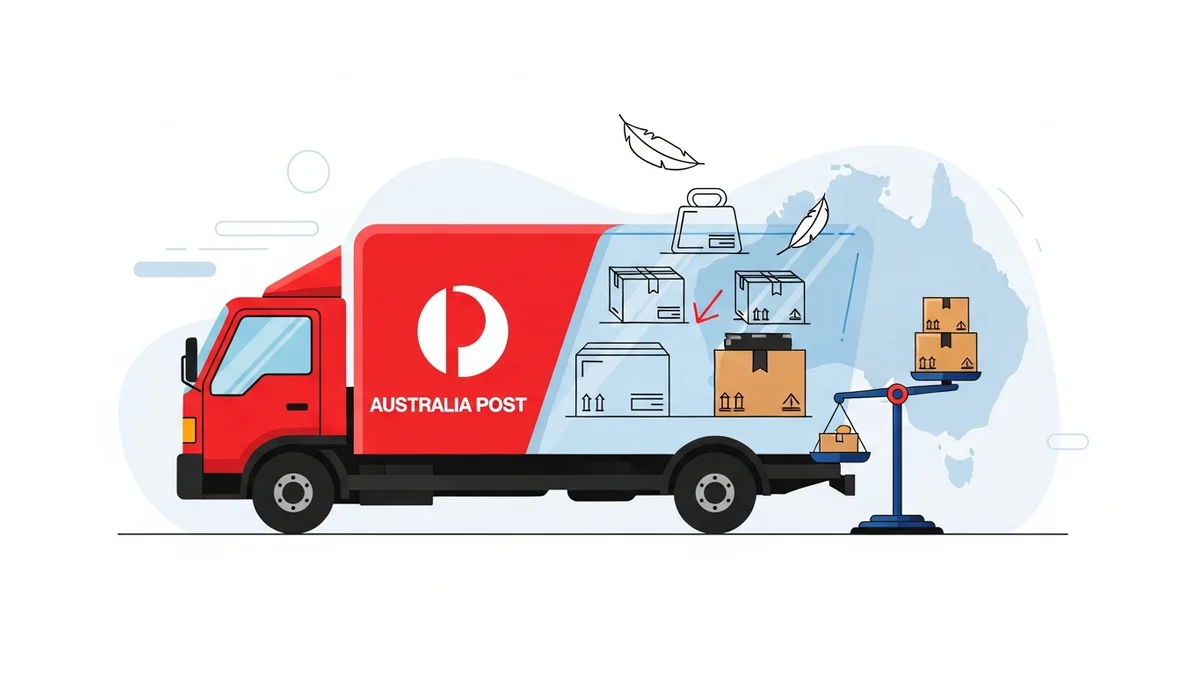
Before diving into solutions, it's essential to understand how Australia Post calculates shipping charges. They consider two main factors: the actual weight and the volumetric weight of your parcel. The higher of these two weights is what you will be charged for.
The actual weight is simply what your package weighs when placed on a scale. The volumetric weight, however, accounts for the space your package takes up in transit. Australia Post uses a specific formula to calculate this.
Actual Weight vs. Volumetric Weight
- Actual Weight: The physical weight of your parcel, including the product and all packaging materials, measured in kilograms.
- Volumetric Weight: Calculated using the parcel's dimensions. For Australia Post domestic services, the formula is
Length (cm) x Width (cm) x Height (cm) / 250. The result is in kilograms.
For example, a lightweight but bulky item, like a large pillow, might have a low actual weight but a high volumetric weight. Australia Post will charge you based on the higher volumetric weight in this scenario. This highlights why optimising both weight and size is crucial.
Step-by-Step Guide: How to Reduce Packaging Weight and Size
Optimising your packaging involves a systematic approach. By following these steps, you can identify areas for improvement and implement changes that lead to real cost savings.
Step 1: Audit Your Current Packaging Materials and Processes
The first step to reducing costs is to understand your current situation. Gather all the packaging materials you currently use and review your packing methods.
- List All Packaging Components: Document every item you use for packaging, including boxes, satchels, void fill (bubble wrap, packing peanuts, paper), tape, and labels.
- Weigh Empty Packaging: Take an empty example of each box size and type of satchel you use, and weigh them. Note these weights down.
- Measure Common Void Fill: Estimate or weigh the typical amount of void fill you use for different product types. For instance, how much bubble wrap for a mug, or how many air pillows for a shoebox-sized item?
- Analyse Product-to-Packaging Ratio: For your most frequently shipped products, compare the product's size and weight to the size and weight of its packaging. Are you using a box that's far too large for the item inside? Is the void fill excessive?
This audit will reveal which materials contribute most to your total package weight and identify opportunities for reduction.
Step 2: Choose Lighter, Stronger, and More Efficient Materials
Once you know where the weight is coming from, you can make informed decisions about alternative materials. The goal is to maintain product protection while minimising unnecessary weight.
Boxes and Satchels
- Lightweight Corrugated Cardboard: For items requiring a box, consider using single-wall corrugated cardboard instead of double-wall if the product doesn't need extreme protection. Ensure the box is still sturdy enough to prevent damage.
- Poly Mailers and Mailing Satchels: For non-fragile items like clothing, fabric, or soft goods, poly mailers or lightweight mailing satchels are often significantly lighter and smaller than boxes. They also conform to the item's shape, reducing volumetric weight.
- Right-Sized Boxes: Invest in a variety of box sizes that closely match your product dimensions. Shipping small items in oversized boxes not only adds unnecessary cardboard weight but also increases volumetric weight due to empty space.
- Custom Packaging: For high-volume sellers with specific product lines, custom-sized boxes can perfectly fit your products, drastically cutting down on both actual and volumetric weight.
Practical Example: If you sell t-shirts, switching from a small corrugated box (which might weigh 100g) to a poly mailer (which weighs 15g) immediately saves 85g per package. Over hundreds of orders, this adds up to substantial savings.
Void Fill and Protective Materials
Void fill is essential for protecting fragile items, but it can also add significant weight and bulk. Opt for lighter alternatives that offer sufficient cushioning.
- Air Pillows: These are incredibly lightweight and effective for filling empty space and bracing products. They are mostly air, adding minimal weight.
- Bubble Wrap: While it adds some weight, using the correct gauge and amount of bubble wrap can offer superior protection without excessive bulk compared to heavier alternatives like packing peanuts.
- Honeycomb Paper or Crinkle Paper: These can be lighter alternatives to traditional shredded paper or packing peanuts, especially when used sparingly. They also offer an eco-friendly appeal.
- Minimalist Approach: If your product is robust, consider if void fill is truly necessary. Sometimes, a snug-fitting box is enough.
Practical Example: Replacing a large amount of heavy packing peanuts (which can weigh hundreds of grams for a medium box) with a few air pillows (weighing a few grams) drastically reduces the package's overall weight while still protecting the item.
Tapes and Labels
- Lightweight Packing Tape: While seemingly minor, using lighter, stronger packing tape rather than excessively wide or thick tape can contribute to overall weight reduction, especially when packing many parcels.
- Self-Adhesive Labels: Ensure your shipping labels are self-adhesive and don't require extra paper or tape to attach, which can add minimal but avoidable weight.
Step 3: Optimise Package Size to Reduce Volumetric Weight
Even with lighter materials, an unnecessarily large package will incur higher costs due to volumetric weight. Think "snug fit" for every item.
- Match Packaging to Product: Always select the smallest possible package that safely accommodates your product and any necessary protective materials. This is the most crucial step for volumetric weight reduction.
- Fold and Compress Soft Goods: For items like clothing, towels, or blankets, fold them neatly and compress them as much as possible before placing them in a poly mailer or appropriately sized box. This reduces the overall dimensions (length, width, height).
- Remove Unnecessary Bulk: If your product comes in its own retail packaging that is bulky but not essential for shipping protection, consider if you can remove it (with customer consent, if applicable) and package the item more compactly.
- Avoid Empty Space: Fill any remaining empty space with the lightest possible void fill (e.g., air pillows) to prevent items from shifting, but do not overfill or use heavy materials. Empty space directly contributes to high volumetric weight.
Practical Example: A large, fluffy sweater might fit into a 30x20x10 cm box if loosely packed. However, if carefully folded and compressed into a poly mailer or a 25x18x5 cm box, its volumetric weight will be significantly lower, leading to cheaper shipping.
Step 4: Consolidate Orders When Practical
When a customer orders multiple items, combining them into a single, optimised package can often be cheaper than shipping each item separately. This strategy saves on base shipping costs for multiple parcels.
- Assess Combined Size and Weight: Before consolidating, calculate the total actual and volumetric weight of the combined items in one package. Compare this to the cost of shipping them individually. Often, the single package will be cheaper, even if it's slightly heavier or larger than individual parcels.
- Use Larger, Optimised Packaging: When combining items, choose a single, appropriately sized box or satchel that fits all items snugly without excessive empty space.
- Consider Fragility: Be mindful of combining fragile items with heavy or sharp items. Ensure adequate internal packaging to prevent damage during transit.
Practical Example: If a customer buys a small book and a bookmark, shipping them in one small box is almost certainly cheaper than two separate envelopes. The combined package still benefits from the weight and size optimisation principles.
Step 5: Implement and Monitor Packaging Best Practices
Reducing packaging weight isn't a one-time fix; it requires ongoing attention and consistent practices within your WooCommerce store's fulfilment process.
- Standardise Packing Procedures: Create clear guidelines for your packing team (even if it's just you!). Specify which packaging materials to use for different product types and how to pack them efficiently.
- Invest in Measuring Tools: Have a reliable digital scale and a measuring tape readily available at your packing station. Weigh and measure every package before generating shipping labels to ensure accuracy and avoid surcharges.
- Regularly Review Suppliers: Periodically check with your packaging suppliers for new, lighter, or more sustainable material options. Material technology is always evolving.
- Educate Your Team: If you have employees packing orders, ensure they understand the impact of their choices on shipping costs and product safety. Provide training on efficient packing techniques.
- Track and Analyse Shipping Costs: Regularly review your Australia Post invoices. Look for trends, identify products that consistently incur high shipping costs, and investigate if further packaging optimisation is possible for those items.
Tools and Resources for WooCommerce Merchants
Several tools can help WooCommerce store owners manage and optimise their shipping, including:
- WooCommerce Shipping Plugins: Many plugins integrate with Australia Post and can help calculate shipping rates based on actual and volumetric weight, giving you accurate costs upfront. Some even suggest optimal package sizes.
- Digital Scales and Measuring Tapes: Essential for accurately weighing and measuring packages before shipment.
- Packaging Suppliers: Work with suppliers who offer a variety of lightweight and eco-friendly packaging options. Many can provide samples for testing.
Beyond Weight: Other Strategies for Lowering Australia Post Costs
While packaging weight is a primary focus, remember to also consider these broader strategies:
- Service Selection: Always choose the appropriate Australia Post service. Standard Post is cheaper than Express Post if speed isn't critical.
- Flat-Rate Satchels: For items that fit, Australia Post's flat-rate satchels can be a cost-effective option, as their price is fixed regardless of weight (up to a certain limit) and destination.
- Negotiate Rates: If you ship a high volume of parcels, contact Australia Post directly to see if you qualify for business rates or discounts.
Related Articles
Continue your learning with these related resources:
- The Complete Guide to Managing Australia Post Shipping for Your WooCommerce Store (Comprehensive Guide)
- How Volumetric Weight Affects Your Australia Post Costs for WooCommerce Shipments
- Return to Sender vs. Abandon: Optimizing Australia Post Undeliverable Options for WooCommerce
- Navigating Australia Post Dangerous Goods Rules for WooCommerce Stores
- How to Communicate Australia Post Delivery Delays to Your WooCommerce Customers
- How to Handle WooCommerce Returns Without Losing Money on Each Reverse Shipment
Conclusion
Reducing packaging weight and optimising package size are powerful strategies for any WooCommerce store owner looking to lower their Australia Post shipping costs. By systematically auditing your current practices, choosing lighter materials, and focussing on snug, efficient packaging, you can significantly impact your profitability.
Implementing these practical steps not only saves you money but also contributes to a more sustainable shipping operation. Start auditing your packaging today and watch your shipping expenses shrink.